Index Funds Explained for Beginners: The Simplest Way to Start Investing in 2026
Most people think investing is complicated, expensive, and only for people who already have money. Index funds exist to prove all of that wrong.
If you’ve been sitting on the sidelines, watching your savings account earn next to nothing while inflation quietly eats away at your purchasing power, index funds might be the single most important financial concept you learn this year. They’re simple, low-cost, and have a track record that puts most professional investors to shame. Here’s everything you need to know.
What Is an Index Fund, Exactly?
An index fund is a type of investment that tracks a market index — a preset list of stocks or bonds. The most famous example is the S&P 500, which tracks the 500 largest publicly traded companies in the United States, including names like Apple, Microsoft, Amazon, and Nvidia.
When you invest in an S&P 500 index fund, you’re not picking individual stocks. Instead, you’re buying a tiny slice of all 500 companies at once. If the overall market goes up, your investment goes up. If it goes down, it goes down too.
The key thing to understand is that index funds are passive investments. There’s no fund manager spending their day trying to beat the market. The fund simply mirrors the index it’s designed to track, which is exactly why they’re so affordable and beginner-friendly.
How Are Index Funds Different From Other Investments?
It helps to understand how index funds compare to a few alternatives you’ve probably heard of.
Individual stocks mean you’re buying shares of one specific company. If that company tanks, so does your investment. Index funds spread your money across hundreds or thousands of companies, which dramatically reduces your risk through something called diversification.
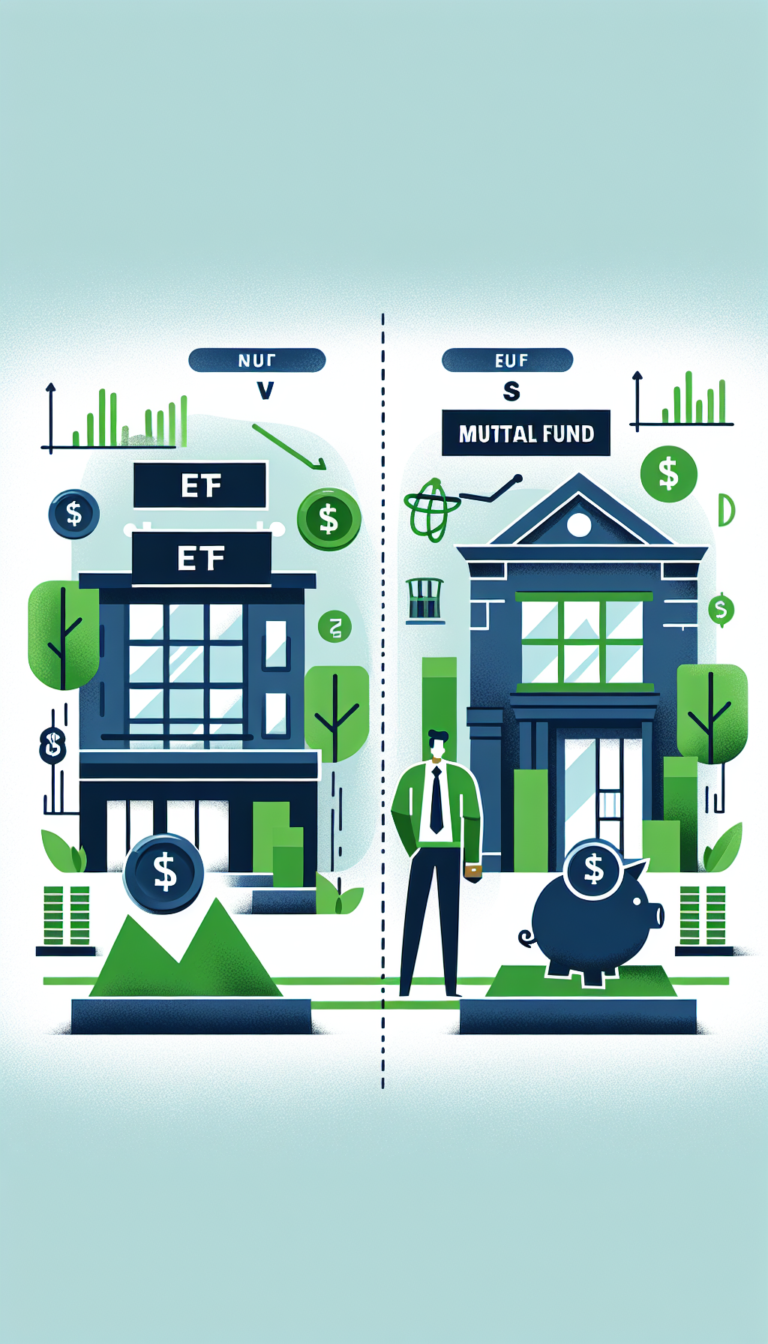
Actively managed mutual funds are run by professional fund managers who research and pick stocks in an attempt to beat the market. They sound impressive, but study after study shows that most actively managed funds underperform simple index funds over the long run — and they charge you significantly more in fees for the privilege.
ETFs (exchange-traded funds) are worth mentioning because index funds often come in ETF form. An ETF is just a fund that trades on the stock market like a regular stock. Many index funds are structured as ETFs, so you’ll see the terms used interchangeably. The difference is mostly technical — for beginners, it doesn’t matter much which form you choose.
Why Index Funds Are So Popular With Young Investors in 2026
The investing landscape has shifted dramatically in the last decade, and index funds have become the go-to strategy for millions of everyday investors. Here’s why they resonate especially well with people in their 20s and 30s.
Low fees. This is massive. Index funds typically have an expense ratio — the annual fee you pay — of 0.03% to 0.20%. That’s a few dollars per year on a $10,000 investment. Compare that to actively managed funds that can charge 1% or more annually. Over 30 years, that fee difference can cost you tens of thousands of dollars in lost compound growth.
You don’t need to know anything about stocks. You’re not trying to predict which company will win. You’re betting on the entire economy growing over time — which, historically, it has.
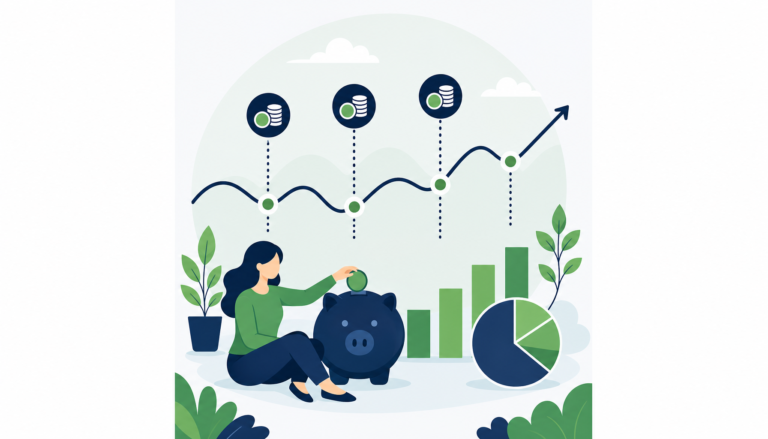
Time is your biggest advantage. As a young investor, you have decades ahead of you. Index funds benefit enormously from compound interest. Even modest monthly contributions, invested consistently, can grow into a significant portfolio over 20 to 30 years.
Low starting requirements. Many brokerages now let you buy fractional shares of ETFs with as little as $1. There’s no excuse to wait until you have “enough” money to start.
Understanding the Numbers: What Returns Look Like
Let’s talk about realistic expectations, because understanding this upfront will keep you from panicking when markets dip.
The S&P 500 has historically returned an average of about 10% annually before inflation, or roughly 7% after inflation. That’s not every year — some years it returns 25%, other years it drops 20%. But averaged over long periods, the trend has been consistently upward.
Here’s a quick example of how compound growth works in your favor:
If you invest $200 per month starting at age 22, and your index fund grows at an average of 7% annually, by age 52 you’d have approximately $227,000. If you wait until age 32 to start the same $200 per month at the same return, you’d have roughly $113,000 by age 52. That decade of delay costs you over $114,000 — without changing anything else.
This is why the most important thing you can do right now isn’t finding the perfect fund. It’s starting.
How to Actually Buy Your First Index Fund
Buying an index fund is simpler than most people expect. Here’s a straightforward process to follow in 2026.
Step 1: Open a brokerage account. Popular options include Fidelity, Charles Schwab, and Vanguard. All three offer zero-commission trades and access to index funds with very low expense ratios. If you want to invest for retirement specifically, open a Roth IRA — this lets your money grow completely tax-free, which is one of the best deals available to young investors.
Step 2: Fund your account. Link your bank account and transfer money in. Even $50 or $100 to start is fine. You can set up automatic contributions later.
Step 3: Choose an index fund. For most beginners, a total U.S. market fund or S&P 500 index fund is a solid starting point. Some widely referenced options include Fidelity’s FZROX, Vanguard’s VOO, or Schwab’s SCHB. Each tracks broad market performance with minimal fees.
Step 4: Buy shares and automate. Set up automatic monthly contributions so you invest consistently without having to think about it. This strategy — investing a fixed amount regularly regardless of market conditions — is called dollar-cost averaging, and it’s one of the most reliable ways to build wealth steadily over time.
Before you start investing, it’s also worth getting a clear picture of your overall financial health. Knowing your credit score and understanding any debts you’re carrying helps you make smarter decisions about how much you can comfortably invest. Credit Karma offers free credit monitoring and personalized financial insights that make it easy to see exactly where you stand — it takes about five minutes to set up and costs nothing.
Common Mistakes Beginners Make With Index Funds
Even with a simple strategy, there are a few pitfalls worth knowing about before you get started.
Panic selling during downturns. Markets drop. It happens every few years, sometimes dramatically. The worst thing you can do is sell your index funds when the market is down, locking in your losses. The entire strategy depends on staying invested through the ups and downs. If you can’t stomach watching your balance drop temporarily, start with smaller amounts until you build confidence.
Over-complicating it. Some beginners spend months researching instead of just starting. You don’t need 10 different funds. One broad market index fund is genuinely enough to get started.
Ignoring fees. Not all index funds are created equal. Always check the expense ratio before buying. There’s rarely a good reason to pay more than 0.20% annually for a basic index fund in 2026.
Confusing short-term and long-term goals. Index funds are best for money you won’t need for at least 5 years. If you’re saving for a car next year or an emergency fund, that money should stay in a high-yield savings account — not the stock market.
Index Funds and Your Long-Term Financial Picture
Index funds aren’t a get-rich-quick scheme. They’re a get-financially-stable-over-time strategy. The people who benefit most are those who invest consistently, ignore short-term noise, and let time do the heavy lifting.
In 2026, there are more tools and resources available to new investors than ever before. Commission-free trading, fractional shares, and automatic investing features have eliminated almost every barrier that used to keep young people out of the market.
The gap between people who start investing in their early 20s and those who wait until their 30s or 40s isn’t about income or intelligence — it’s mostly about inertia. Index funds are specifically designed to reward people who show up consistently, even imperfectly.
You don’t need a financial advisor. You don’t need a large lump sum. You don’t need to understand every detail of how markets work. You just need to start, keep contributing, and give it time.
Conclusion
Index funds are one of the most powerful and accessible tools available to anyone building wealth from scratch. They’re diversified, low-cost, and require almost no active management on your part. If you’re between 18 and 35 in 2026, time is your single greatest financial asset — and index funds are one of the best ways to put it to work.
Your next step is simple: open a brokerage account or Roth IRA this week, make your first contribution — even if it’s small — and set up automatic monthly investing. That one action puts you ahead of the majority of people your age.
Frequently Asked Questions
How much money do I need to start investing in index funds?
You can start with as little as $1 at many brokerages that offer fractional shares. There’s no minimum requirement to open accounts at Fidelity or Charles Schwab. The most important thing is to start, not to start big.
Are index funds safe for beginners?
Index funds are considered one of the lower-risk investment options because they’re diversified across hundreds of companies. However, they’re not risk-free — market values go up and down. They’re best suited for money you can leave invested for five or more years.
What’s the difference between an index fund and a mutual fund?
All index funds are a type of mutual fund, but not all mutual funds are index funds. The key difference is management style. Index funds passively track a market index, while traditional mutual funds are actively managed by professionals who try to outperform the market — and typically charge higher fees for doing so.
Should I invest in index funds or pay off debt first?
It depends on the interest rate of your debt. High-interest debt like credit cards — often 20% or more — should generally be paid off before investing, since the guaranteed “return” of eliminating that interest beats most market returns. Low-interest debt like federal student loans can often be managed alongside investing.
Can I lose all my money in an index fund?
Technically possible but extremely unlikely with a broad market index fund like one tracking the S&P 500. For that to happen, the 500 largest U.S. companies would all need to collapse simultaneously. The more realistic risk is a temporary decline in value, which historically has always recovered over time with patient, long-term investing.