Online Banks vs Traditional Banks: Which One Actually Saves You More Money?
Your bank could be quietly costing you hundreds of dollars a year — and you might not even realize it. Choosing between online banks vs traditional banks is one of the most impactful money decisions you can make in your twenties and thirties, and most people make it without doing any research at all.
If you opened your first bank account with whatever institution your parents used, you are not alone. But as you start earning more, saving more, and actually paying attention to your finances, it is worth asking whether your current bank is truly working for you — or just working for itself. This guide breaks down everything you need to know to make a smarter choice.
What Is the Difference Between Online Banks and Traditional Banks?
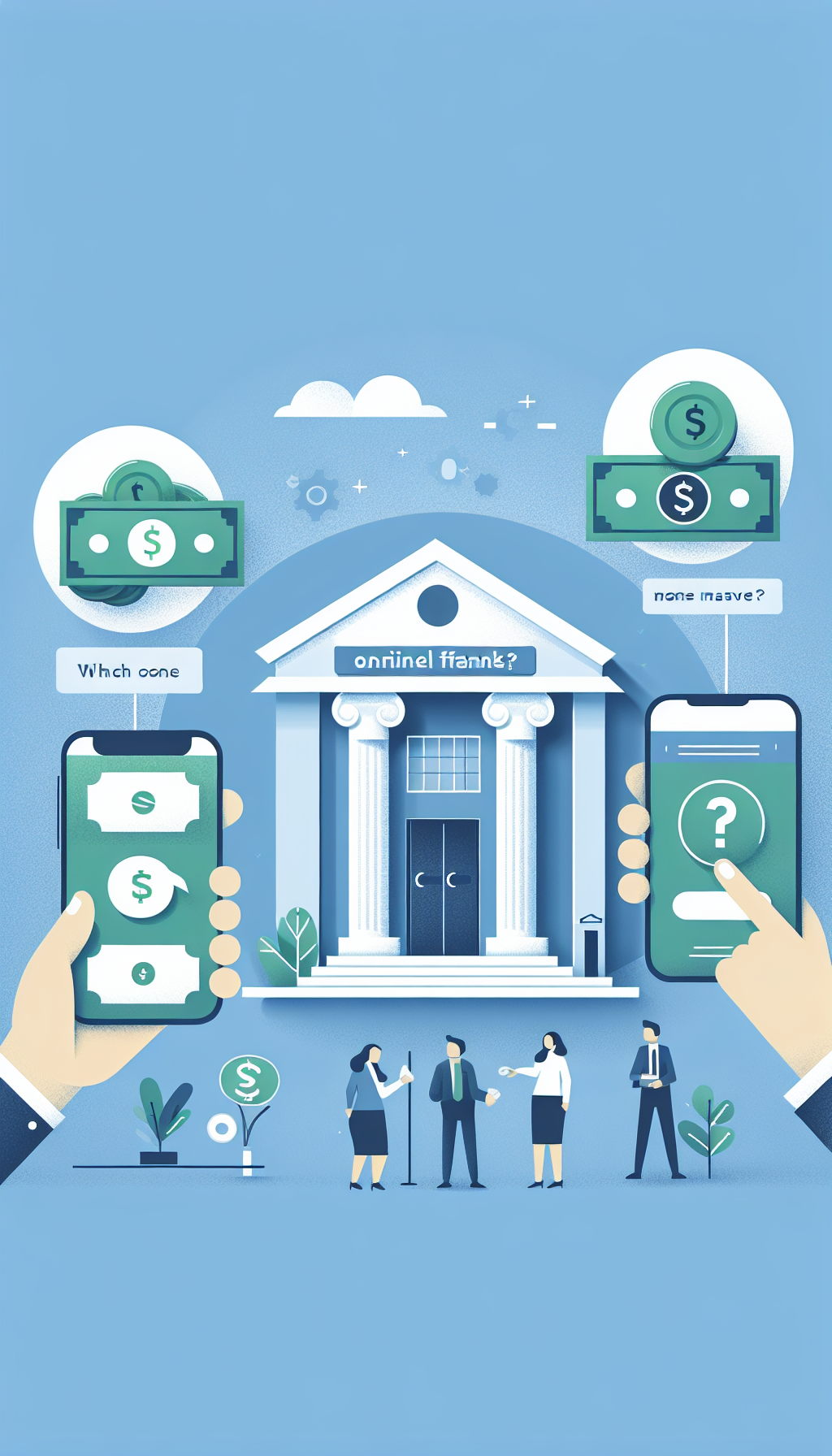
At its core, the difference comes down to physical presence. Traditional banks — think Chase, Bank of America, or Wells Fargo — operate networks of physical branches where you can walk in, speak to a teller, and handle transactions in person. They have been around for decades and are deeply embedded in how most Americans think about banking.
Online banks, on the other hand, operate entirely through apps and websites. They have no brick-and-mortar locations. Examples include Ally Bank, SoFi, Chime, and Marcus by Goldman Sachs. Because they do not carry the overhead costs of maintaining thousands of branch locations, they pass a lot of those savings directly to customers.
Both types of banks are insured by the FDIC up to $250,000 per depositor, so your money is equally protected regardless of which you choose.
How Interest Rates Compare: Where Your Savings Actually Grow
This is where things get really interesting — and honestly, a little frustrating if you have been sitting in a traditional bank savings account without paying attention.
As of recent years, many traditional bank savings accounts offer an Annual Percentage Yield (APY) of 0.01% to 0.05%. That is not a typo. On a $10,000 balance, you would earn roughly $1 to $5 per year. Meanwhile, many online high-yield savings accounts are offering APYs between 4.00% and 5.00% or higher depending on the rate environment. That same $10,000 could earn $400 to $500 in a single year.
The reason for this gap is simple: online banks have lower operating costs, so they can afford to reward depositors with better rates. For young adults trying to build an emergency fund or save for a down payment, this difference is not trivial — it is potentially life-changing over a few years of consistent saving.
Fees: The Hidden Drain on Your Account Balance
Traditional banks are notorious for fees. Monthly maintenance fees, overdraft fees, out-of-network ATM fees, minimum balance fees — it adds up fast. According to Bankrate, the average overdraft fee at a traditional bank hovers around $35. Hit that a few times a year and you have lost over $100 before you even noticed.
Online banks typically take a very different approach. Many of them charge zero monthly fees, zero minimum balance requirements, and some even reimburse ATM fees nationwide. Chime, for example, has built much of its brand around eliminating fees entirely. Ally Bank offers free overdraft protection by linking to a savings account.
If you are just starting out and your account balance fluctuates from paycheck to paycheck, a fee-free online bank can protect you from the kind of financial death by a thousand cuts that keeps so many young adults stuck.
Convenience and Access: Is the Branch Really That Important?
Here is the honest truth: most people under 35 never set foot in a bank branch. Nearly every banking task — transferring money, depositing checks, paying bills, disputing a transaction — can be done instantly through a mobile app. In that context, the physical branch network that traditional banks pay so much to maintain is something you are funding but probably not using.
That said, there are real situations where a branch matters. If you need a cashier’s check, a notarized document, or you deal regularly in cash, a traditional bank is far more convenient. Depositing cash into an online bank account is possible but clunky — it usually requires purchasing a money order or using a Green Dot network location, neither of which is ideal.
For most young adults with straightforward banking needs, online banks cover 95% of daily tasks better and faster through mobile apps. But if your work involves handling a lot of cash or you frequently need in-person assistance, keeping a traditional bank account open as a secondary account is a perfectly valid strategy.
Customer Service: Who Actually Picks Up the Phone?
This is where the reputation of online banks gets mixed reviews. Some, like Ally Bank and Marcus, are consistently praised for responsive customer service available by phone, chat, and email around the clock. Others, especially some fintech-style challenger banks, can leave you waiting days for a resolution to a dispute.
Traditional banks generally offer in-person support as a fallback, which many people find reassuring. If something goes wrong — a fraudulent charge, a locked account, a complicated wire transfer — having the option to walk into a branch and speak to a human being face-to-face is not nothing.
Before you open an online bank account, read real customer reviews on platforms like Trustpilot or the CFPB complaint database. The quality of customer service varies enormously from one online bank to another, and it is worth doing five minutes of homework to avoid being stuck with a bank that ghosts you when you need help most.
Credit and Lending: Which Bank Has Your Back When You Need to Borrow?
One area where traditional banks have a legitimate edge is lending. If you have an established relationship with a bank, it can make it easier to get approved for a mortgage, car loan, or personal loan. Local community banks and credit unions in particular are known for being flexible with borrowers they know personally.
Online banks are catching up here, but they are not quite there yet for every product. SoFi, for example, offers mortgages, personal loans, and student loan refinancing entirely online. Ally Bank offers auto financing. But the range of products and the ability to negotiate rates in person is still more robust at many traditional institutions.
This is also a good moment to think about your credit score, which plays a huge role in what rates you qualify for no matter where you bank. Checking your credit regularly is a smart habit, and Credit Karma is a free tool that lets you see your credit score and credit report without any impact to your score. It also gives you personalized recommendations for financial products based on your credit profile — a genuinely useful resource when you are trying to figure out which loans or cards you might qualify for.
How to Decide Which Type of Bank Is Right for You
There is no single right answer here. Your best banking setup depends on your specific lifestyle, habits, and financial goals. Here is a quick framework to help you decide:
Choose an online bank if:
- You want to maximize interest earned on savings
- You rarely use cash and do most banking through your phone
- You want to avoid monthly fees and minimum balance requirements
- You are comfortable resolving most issues via chat or phone
Stick with or add a traditional bank if:
- You regularly deal in cash or need cashier’s checks
- You want in-person support for complex financial decisions
- You are building a relationship for future mortgage or business lending
- You feel more secure having a local branch as a backup
Many financially savvy young adults actually use both. An online high-yield savings account for building their emergency fund and long-term savings, paired with a traditional checking account for everyday cash transactions and branch access when needed. There is no rule that says you can only have one bank.
Conclusion: Make Your Bank Work Harder for You
The bottom line is straightforward: if your money is sitting in a traditional bank savings account earning next to nothing while you are being charged monthly fees, you are leaving real money on the table. Online banks have made it easier than ever to earn more, pay less, and manage your finances entirely from your phone.
Your next step is simple. Pull up your current savings account and check your APY right now. If it is under 1%, open a high-yield savings account with an online bank this week — the process takes about ten minutes. While you are at it, check your credit score for free on Credit Karma so you have a clear picture of your full financial health. Small moves like these compound into big results over time.
Frequently Asked Questions
Are online banks safe?
Yes. The vast majority of reputable online banks are FDIC insured up to $250,000 per depositor, the same protection offered by traditional banks. Always verify FDIC membership before opening any account.
Can I deposit cash into an online bank account?
It is possible but less convenient. Most online banks allow cash deposits through retail partners like Walmart or Green Dot locations, or by purchasing a money order and mailing it. If you deposit cash frequently, you may want to keep a traditional bank checking account as well.
Do online banks offer checking accounts?
Yes, most online banks offer both checking and savings accounts. Many come with debit cards and access to large fee-free ATM networks like Allpoint or MoneyPass, which have tens of thousands of locations nationwide.
What is a high-yield savings account?
A high-yield savings account is a savings account that offers a significantly higher APY than a standard savings account — typically found at online banks. The higher rate means your money grows faster while still remaining liquid and FDIC insured.
Is it hard to switch from a traditional bank to an online bank?
Not at all. Opening an online bank account typically takes under fifteen minutes with just your ID and Social Security number. You can transfer funds electronically and update your direct deposit information with your employer. The main hassle is updating any automatic payments, which most people complete over a week or two.