What Is a Debt to Income Ratio and Why It Matters in 2026
Your debt to income ratio could be the single number standing between you and the apartment, car loan, or mortgage you want. Understanding what it is — and how to improve it — might be the most financially empowering thing you do this year.
What Is a Debt to Income Ratio?
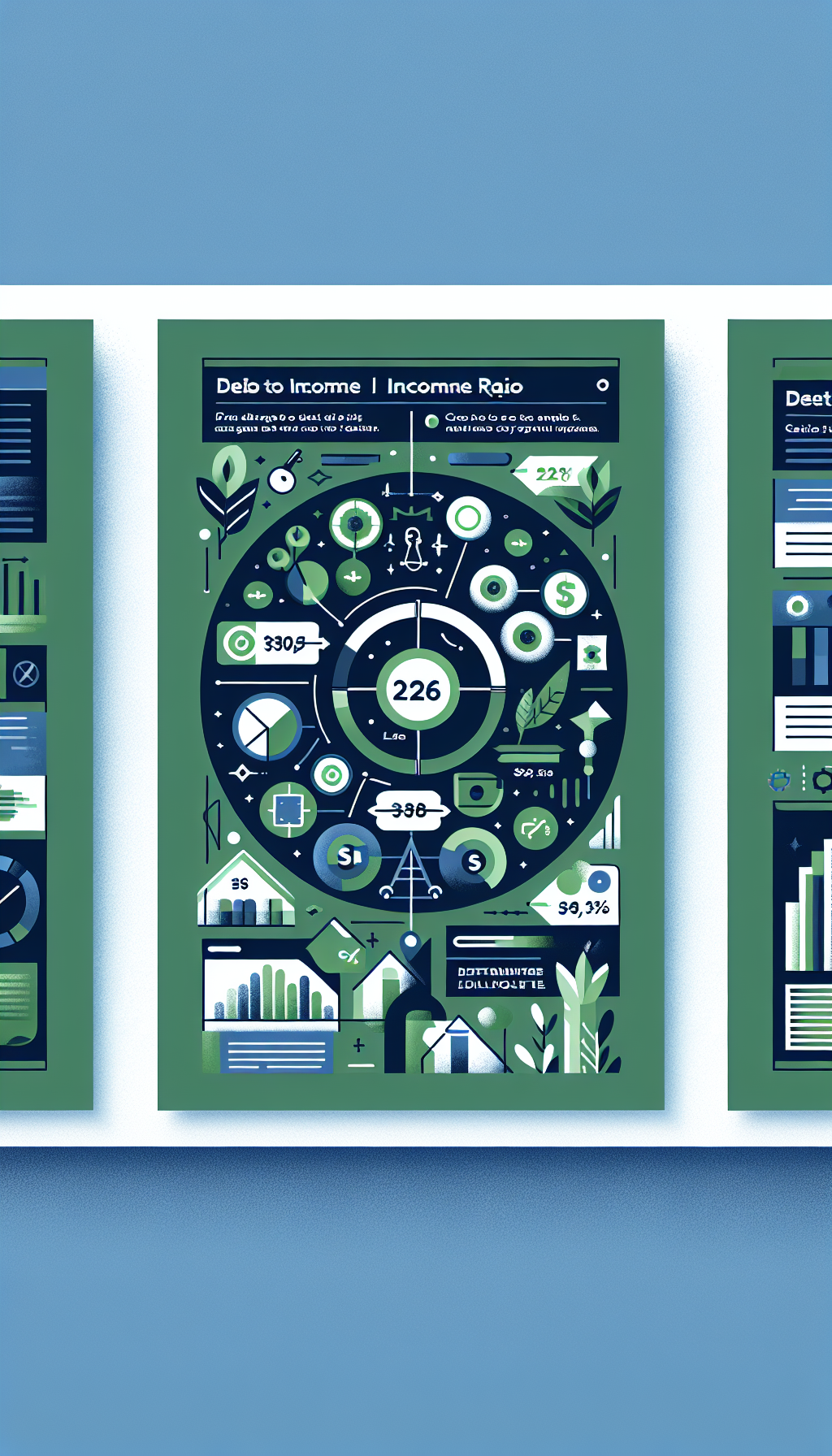
A debt to income ratio, commonly abbreviated as DTI, is a percentage that compares how much money you owe each month to how much money you earn each month. Lenders use this number to figure out whether you can realistically take on more debt without drowning financially.
Here is the basic formula:
DTI = (Total Monthly Debt Payments ÷ Gross Monthly Income) × 100
So if you pay $1,200 a month toward debt and you earn $4,000 a month before taxes, your DTI is 30%. Simple math, major consequences.
Your debt to income ratio does not factor in your credit score, your savings balance, or how responsible you feel with money. It is a cold, hard percentage — and lenders take it very seriously.
What Counts as Debt in Your DTI Calculation?
Not every payment you make counts toward your DTI, so it is important to know what lenders are actually measuring. The following are typically included in your monthly debt payments:
- Rent or mortgage payments
- Car loan payments
- Student loan payments
- Credit card minimum payments
- Personal loan payments
- Child support or alimony payments
The following are generally NOT included:
- Grocery bills
- Utility payments
- Streaming subscriptions
- Cell phone bills
- Insurance premiums
This distinction matters because a lot of people overestimate or underestimate their DTI by throwing in everyday expenses that lenders do not count. When you sit down to calculate yours, stick to the list above.
What Is a Good Debt to Income Ratio?
Knowing your number is only useful if you understand what it actually means. Here is a general breakdown of how most lenders interpret DTI ranges in 2026:
Below 20% — Excellent
You have very little debt relative to your income. Lenders see you as a low-risk borrower, and you will likely qualify for the best interest rates available.
20% to 35% — Good
This is a healthy range that most financial advisors consider manageable. You should still qualify for most loan products with reasonable terms.
36% to 49% — Borderline
You are carrying a notable debt load. Some lenders will still approve you, but you may face higher interest rates or stricter requirements. This is the zone where you want to start making changes.
50% or higher — High Risk
At this level, lenders are concerned. Many will decline your application outright. If your DTI is here, improving it should be a financial priority before applying for any new credit.
The Consumer Financial Protection Bureau generally recommends keeping your DTI below 43% to qualify for a qualified mortgage, but many lenders in 2026 prefer to see it even lower — ideally under 36%.
How to Calculate Your Debt to Income Ratio Step by Step
You do not need a financial advisor or fancy software to figure out your DTI. Here is how to do it yourself in about five minutes.
Step 1: Add up your gross monthly income.
This is your income before taxes. If you are salaried, divide your annual salary by 12. If your income varies, use a three-month average.
Step 2: List all your qualifying monthly debt payments.
Go through your bank statements and add up every recurring debt payment from the list above. Use the minimum payment for credit cards, not your typical payment amount.
Step 3: Divide your total debt payments by your gross income.
Take that sum from Step 2 and divide it by your gross monthly income from Step 1.
Step 4: Multiply by 100.
This converts the decimal into a percentage — your DTI.
Example:
- Gross monthly income: $3,500
- Car payment: $275
- Student loan: $200
- Credit card minimum: $75
- Total debt: $550
- DTI: ($550 ÷ $3,500) × 100 = 15.7%
That is an excellent DTI and would put you in a strong borrowing position with most lenders.
Why Your Debt to Income Ratio Matters for Loans and Credit
Your DTI shows up at crucial financial moments — often when the stakes are highest. Here are the main situations where lenders will pull your DTI and use it to make decisions:
Mortgage applications: This is where DTI carries the most weight. Most mortgage lenders in 2026 want to see a front-end DTI (housing costs only) below 28% and a back-end DTI (all debts) below 36% to 43%.
Auto loans: Car dealerships and banks use DTI to decide how large of a monthly payment you can handle. A lower DTI means better rates and more flexibility in what you can buy.
Personal loans: Lenders offering personal loans for things like home improvements or emergency expenses will check your DTI alongside your credit score to assess risk.
Apartment rentals: More landlords and property management companies are now checking DTI or applying income-to-rent ratios (typically requiring your gross income to be at least three times the rent). While not a formal DTI check, the logic is the same.
Understanding your DTI before you apply for anything gives you the power to anticipate decisions, negotiate better, or delay an application until your number improves.
How to Improve Your Debt to Income Ratio
If your DTI is higher than you would like, you have two levers you can pull: reduce your debt or increase your income. Both work. Combined, they work fast.
Pay down high-balance debts aggressively.
Focus on the debts with the highest minimum payments first. Even eliminating one monthly payment can meaningfully shift your DTI. The debt avalanche method — paying off the highest interest rate debt first — can save you money while also shrinking your DTI over time.
Avoid taking on new debt.
Every new loan or credit card application that results in a new monthly payment pushes your DTI higher. Hold off on financing anything new while you work to bring the ratio down.
Increase your income.
A side hustle, freelance work, a part-time job, or negotiating a raise all increase the denominator in your DTI equation. Even an extra $300 to $500 a month in gross income can noticeably lower your percentage.
Refinance existing debt.
If you can refinance a student loan or auto loan to a lower monthly payment, that directly reduces your monthly debt total. Just be mindful of extending loan terms, which can cost more in interest over time even if the monthly payment drops.
Do not close old credit card accounts.
This one is subtle but important. Closing a credit card does not remove its minimum payment from your DTI if you still carry a balance. And closing accounts can hurt your credit score separately. Keep them open and focus on paying the balances down.
One tool that makes tracking all of this easier is Credit Karma. It gives you a free, real-time look at your credit accounts, balances, and credit utilization in one place — which helps you keep tabs on the debts affecting your DTI without having to dig through statements every month. It is completely free and takes about two minutes to set up.
The Difference Between Debt to Income Ratio and Credit Utilization
These two terms get confused a lot, and it is worth clearing up because they measure different things and affect different parts of your financial life.
Debt to income ratio (DTI) compares your total monthly debt payments to your gross monthly income. Lenders calculate this manually when you apply for credit. It does not appear on your credit report.
Credit utilization ratio compares how much of your available revolving credit (like credit cards) you are currently using. It is expressed as a percentage and does appear on your credit report, directly affecting your credit score.
For example, if you have a $5,000 credit card limit and carry a $1,500 balance, your utilization on that card is 30%. Most experts recommend keeping this below 30% — ideally below 10% — for the best credit score impact.
Both ratios matter, but they are used differently. DTI is a lending decision tool. Credit utilization is a credit scoring factor. Keeping both low puts you in the best possible financial position.
Conclusion
Your debt to income ratio is one of the most practical numbers in personal finance, especially when you are at a stage of life where big purchases — a car, a home, a business — are starting to come into view. The good news is that unlike some financial metrics, your DTI is completely within your control. Pay down debt, grow your income, and track your progress consistently.
If you have not calculated your DTI yet, do it today. It takes five minutes and gives you a clear starting point. From there, you can set a realistic goal — whether that is dropping from 45% to 35% over the next year or maintaining a healthy ratio as you take on a mortgage — and build a plan around it.
Start by pulling your credit account information together using Credit Karma so you have a clear picture of what you owe. Then run the numbers, set a target, and take one concrete step this week to move in the right direction.
Frequently Asked Questions
What is a good debt to income ratio for buying a house?
Most mortgage lenders in 2026 prefer a back-end DTI of 43% or lower, with many preferring 36% or less. A DTI below 28% for housing costs alone is considered ideal. The lower your DTI, the better your chances of getting approved and securing a competitive interest rate.
Does your debt to income ratio affect your credit score?
No. Your DTI does not appear on your credit report and does not directly impact your credit score. However, lenders use it alongside your credit score when making approval decisions, so both numbers matter when you apply for credit.
What monthly payments are included in debt to income ratio?
DTI includes recurring debt obligations such as mortgage or rent payments, car loans, student loans, credit card minimum payments, personal loans, and court-ordered payments like alimony or child support. Regular living expenses like groceries, utilities, and subscriptions are not included.
How often should I check my debt to income ratio?
It is a good habit to recalculate your DTI every three to six months or any time your income or debt situation changes significantly. Checking before you apply for any major loan gives you time to improve the number if needed.
Can you have a good credit score but a bad debt to income ratio?
Yes, absolutely. These are two separate calculations. You can have an excellent credit score of 750 or higher while also carrying a DTI of 50% or more if your income is relatively low compared to your debt payments. Lenders evaluate both, so it is possible to be declined for a loan despite good credit if your DTI is too high.