Good Debt vs Bad Debt Explained: What Every Young Adult Needs to Know in 2026
Most people hear the word “debt” and immediately feel a knot in their stomach — but here’s the truth: some debt can actually make you richer. Understanding the difference between good debt and bad debt is one of the most important money skills you can develop in your 20s and 30s, and once you see it clearly, you’ll never look at borrowing the same way again.
Debt is simply a tool. Like any tool, whether it helps you or hurts you depends entirely on how you use it. In 2026, with interest rates still top of mind for millions of Americans and the cost of living squeezing budgets harder than ever, knowing how to classify and manage your debt isn’t just smart — it’s essential.
What Is Good Debt?
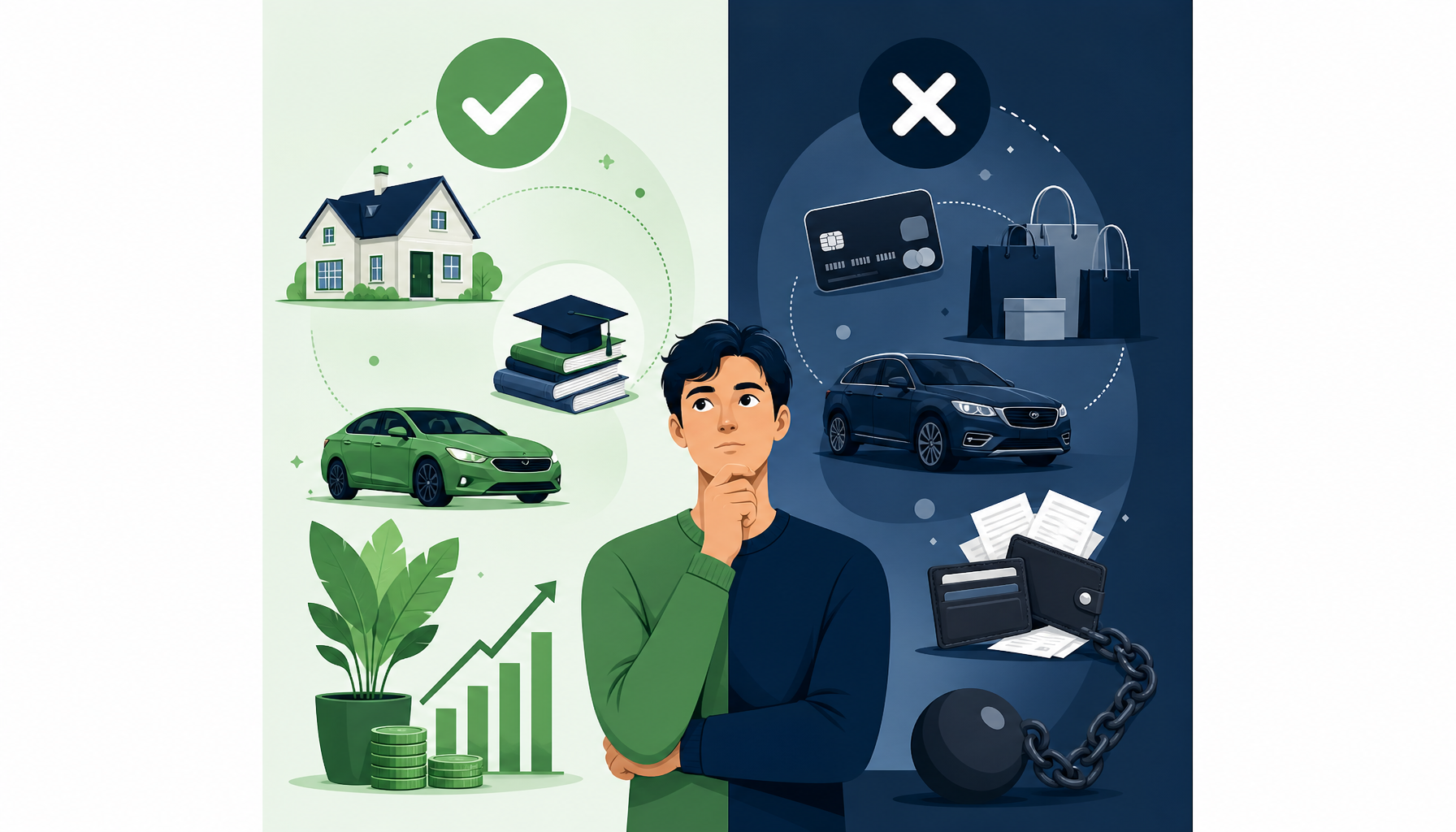
Good debt is borrowing that helps you build long-term wealth, increase your earning potential, or acquire an asset that grows in value over time. The key word here is investment. When you take on debt for something that gives you a financial return greater than the cost of borrowing, you’re making a calculated move, not a mistake.
Think of it this way: if the thing you’re borrowing money for is going to pay you back — financially or in terms of opportunity — that’s generally a good sign you’re looking at good debt.
Common examples of good debt include:
- Student loans for degrees that lead to high-earning careers
- Mortgages on properties that appreciate in value over time
- Small business loans used to grow a profitable venture
- Low-interest personal loans used to consolidate higher-interest debt
Good debt usually comes with lower interest rates, longer repayment timelines, and a clear path to return on investment. That doesn’t mean it’s risk-free — student loans can become burdensome if you don’t finish your degree or enter a low-paying field — but the structure and purpose work in your favor when used wisely.
What Is Bad Debt?
Bad debt is the opposite: it costs you money without building anything of lasting value. It typically comes with high interest rates, short repayment windows, and it finances things that depreciate immediately or disappear entirely after you buy them.
If you’re borrowing money to buy something that loses value the moment you get it — or something you’ll use once and forget — that’s bad debt territory.
Common examples of bad debt include:
- Credit card balances carried month to month at 20–30% APR
- Payday loans with triple-digit interest rates
- Buy now, pay later (BNPL) plans used carelessly for non-essential purchases
- Auto loans on expensive vehicles you can’t comfortably afford
- Personal loans for vacations, luxury items, or entertainment
In 2026, BNPL services have exploded in popularity among younger shoppers, and while they’re not inherently evil, using them habitually for everyday luxuries is a fast track to bad debt accumulation. The purchases feel small in the moment, but the balances add up fast.
The Interest Rate Factor: Why It Changes Everything
One of the clearest ways to distinguish good debt from bad debt is by looking at the interest rate. Interest is the cost of borrowing money, and when that cost is high, it works powerfully against you.
Here’s a simple example. Say you carry a $3,000 balance on a credit card charging 25% APR and only make minimum payments. You could end up paying nearly double the original amount back by the time you’re done — and that’s money that could have gone toward savings, investments, or experiences that actually matter to you.
On the flip side, a mortgage at a 6–7% interest rate on a home that appreciates at 3–5% annually is a different story. You’re paying to borrow, yes, but you’re also building equity and potentially coming out ahead over a 15 to 30-year period.
A general rule of thumb: if your interest rate is higher than what you could reasonably earn investing that money, the debt is costing you more than it’s giving you. In 2026, with the S&P 500 historically returning around 7–10% annually over the long term, any debt above that range deserves your immediate attention.
How to Audit Your Own Debt Right Now
Before you can fix your debt situation, you need to see it clearly. This is where a lot of people get stuck — they avoid looking because it feels overwhelming. But knowledge is power, especially with money.
Here’s a simple framework to audit your debt:
- List every debt you have — credit cards, student loans, car loans, personal loans, medical debt, everything.
- Write down the balance, interest rate, and minimum payment for each one.
- Label each debt as “good,” “bad,” or “gray area” based on what you’ve learned.
- Rank your bad debts by interest rate, from highest to lowest.
- Create a plan to aggressively pay down high-interest bad debt first while maintaining minimum payments on everything else.
If you want an easy way to see all your accounts in one place, Credit Karma is a free tool that lets you track your credit score, monitor your debt balances, and get personalized recommendations — all without affecting your credit score. It’s especially useful when you’re mapping out where you stand and what moves to make next. You can sign up for free at creditkarma.com.
The Gray Areas: Debt That Can Go Either Way
Not all debt fits neatly into “good” or “bad” — and acknowledging that gray area is part of becoming financially mature.
Car loans are a perfect example. A car is almost always a depreciating asset, which sounds like bad debt. But if you need reliable transportation to get to a job that pays well, an affordable auto loan can be a practical necessity. The problem comes when people stretch their budget for a luxury vehicle they can’t sustain.
Student loans can go either way, too. A $30,000 loan for a nursing degree that leads to a $70,000+ salary is very different from a $100,000 loan for a degree with limited job prospects. The debt itself isn’t the issue — the return on investment is.
Even credit cards aren’t automatically bad. If you pay your balance in full every month, you’re essentially getting free short-term borrowing plus rewards. The bad debt trap only springs when you start carrying a balance and letting interest accumulate.
The gray area lesson: context matters more than category. Always ask yourself what this debt is doing for your financial future before you take it on.
Smart Strategies for Managing Both Types of Debt
Whether you’re dealing with good debt, bad debt, or a messy combination of both, there are strategies that work.
For Bad Debt
- Avalanche method: Pay minimums on everything, then throw all extra money at the highest-interest debt first. This saves the most money over time.
- Snowball method: Pay off the smallest balance first for quick psychological wins, then roll that payment into the next debt. Great for motivation.
- Balance transfers: Move high-interest credit card debt to a 0% APR introductory offer to buy yourself time. Watch for transfer fees.
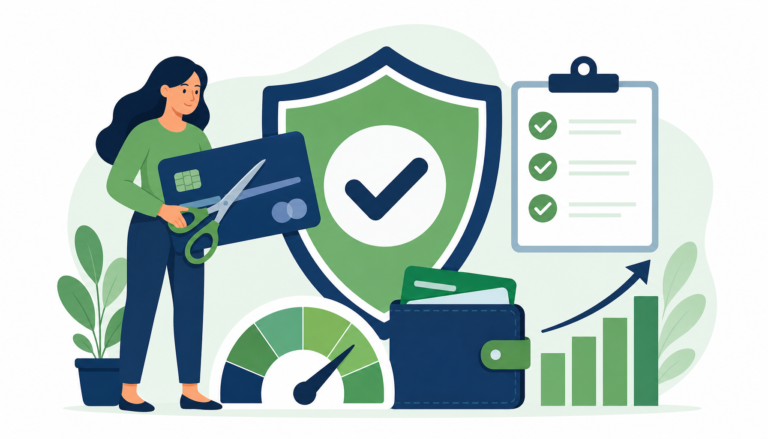
- Stop adding to it: Sounds obvious, but you can’t drain a tub with the faucet running. Freeze the card, delete the app, do what you need to do.
For Good Debt
- Don’t overpay aggressively if the rate is low: If your student loan is at 4% and you could earn 7–10% investing that extra money, it might make more sense to invest rather than pay down the loan early.
- Make extra payments when it makes sense: For higher-rate mortgages or loans above 6–7%, extra principal payments can save you significant interest.
- Refinance when rates drop: If you locked in a mortgage or student loan at a higher rate, keep an eye on opportunities to refinance when conditions improve.
Building a Debt-Smart Mindset for 2026 and Beyond
The real goal isn’t to avoid debt entirely — it’s to be intentional about the debt you take on. In 2026, financial literacy is increasingly recognized as a life skill, and more young adults are waking up to the reality that no one else is going to protect their financial future for them.
Every time you’re about to borrow money, run it through a quick mental checklist:
- Does this help me earn more or build lasting value?
- What is the interest rate, and can I realistically pay it off?
- Am I borrowing because I need to, or because I want something I can’t yet afford?
- What does this debt do to my monthly cash flow?
Developing this habit — even when it slows you down at the checkout line or on the car lot — is what separates people who build wealth from people who just move money around their whole lives.
Debt will almost certainly be part of your financial story. The question is whether it’s working for you or against you.
Conclusion
Understanding good debt vs bad debt isn’t about being perfect — it’s about being informed. Once you see your debt clearly and understand what each balance is actually doing to your financial life, you can make smarter decisions going forward. Start today by listing out every debt you have, labeling it as good, bad, or gray, and creating a plan to attack the bad stuff first. If you haven’t already, sign up for Credit Karma to get a free, real-time view of your credit and debt — it takes five minutes and can completely change how you see your financial picture.
Frequently Asked Questions
Is a car loan good debt or bad debt?
A car loan typically falls into bad debt territory because vehicles depreciate quickly. However, if you need reliable transportation to earn income and you borrow responsibly within your budget, it can be a necessary and manageable expense. The key is keeping the monthly payment affordable and avoiding overextending for a luxury model.
How do I know if I have too much bad debt?
A common benchmark is the debt-to-income (DTI) ratio. Add up all your monthly debt payments and divide by your gross monthly income. A DTI above 36% is generally considered concerning, and anything above 43% can make it harder to qualify for future loans. If your bad debt payments are eating up a large portion of your income, it’s time to make a payoff plan.
Should I invest or pay off debt first?
It depends on the interest rate. For high-interest bad debt (above 7–8%), prioritize paying it off first. For lower-interest good debt like a subsidized student loan or a moderate mortgage, you may come out ahead by investing the difference in a diversified portfolio. Always make sure you have a small emergency fund before going all-in on either strategy.
Does good debt help your credit score?
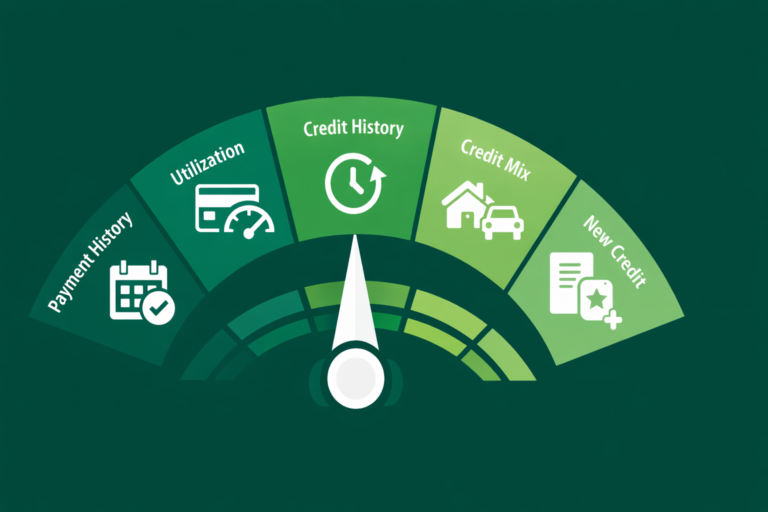
Yes, generally. Responsibly managed installment loans like student loans, mortgages, and auto loans can help build a positive credit history. Making on-time payments and keeping your balances moving in the right direction all contribute to a stronger credit score over time.
Can credit cards ever be good debt?
Yes — if you pay your full balance every month, you’re not technically in debt at all. You’re using the card as a short-term, interest-free tool while potentially earning cash back or travel rewards. The moment you start carrying a balance at 20%+ APR, that changes. Credit cards are one of the clearest examples of a financial tool that is completely defined by how you use it.