Renting vs Buying a Home in Your 20s: What Actually Makes Sense in 2026
Nobody warns you how loud the pressure gets once you hit your mid-20s — suddenly every family dinner turns into a lecture about “throwing money away on rent.” But before you drain your savings for a down payment just to feel like a real adult, it’s worth asking whether buying a home in your 20s is actually the right move for you right now.
The honest answer? It depends — but not in a wishy-washy way. There are real numbers, real lifestyle factors, and real financial trade-offs that should drive this decision, and in 2026, the housing market has added a few new wrinkles to the classic rent vs. buy debate. Here’s everything you need to know before you decide.
The State of the Housing Market in 2026
If you’ve felt priced out of homeownership, you’re not imagining it. Home prices in many U.S. metros remain elevated compared to pre-pandemic levels, and while mortgage rates have come down slightly from their 2023 peaks, they’re still meaningfully higher than the historic lows many millennials locked in before 2022. As of 2026, the average 30-year fixed mortgage rate is hovering around 6–7%, which significantly affects monthly payments compared to even five years ago.
At the same time, rental prices in most major cities have stabilized or even softened slightly after aggressive increases in 2021–2023. That’s actually good news for renters right now — you may have more negotiating power than you think. The bottom line: neither renting nor buying is automatically the “smart” choice in 2026. Context is everything.
The Real Cost of Buying a Home (That Nobody Talks About)
Most people focus on the mortgage payment when they think about buying, but that’s only one piece of the puzzle. When you buy a home, you’re signing up for a long list of ongoing costs that renters simply don’t deal with.
Here’s what you actually need to budget for when you buy:
- Down payment: Typically 3–20% of the purchase price. On a $350,000 home, that’s $10,500 to $70,000 upfront.
- Closing costs: Usually 2–5% of the loan amount, adding another $7,000–$17,500 to your out-of-pocket costs at signing.
- Property taxes: Varies by state and county, but often $3,000–$8,000 per year.
- Homeowner’s insurance: Roughly $1,500–$3,000 per year depending on location.
- Maintenance and repairs: Financial experts recommend budgeting 1–2% of your home’s value annually. On a $350,000 home, that’s up to $7,000 a year for things like HVAC repairs, roof issues, and appliances.
- HOA fees: If applicable, these can run $200–$600+ per month in many communities.
When you add it all up, homeownership often costs significantly more per month than a comparable rent payment — at least in the early years. The equation shifts over time as you build equity and your mortgage stays fixed while rents rise, but that break-even point can take 5–10 years depending on your market.
The Real Benefits of Renting (Yes, There Are Several)
Renting gets a bad rap as “throwing money away,” but that framing is oversimplified and frankly a little outdated. When you rent, you’re paying for a place to live — that’s not throwing money away, it’s exchanging money for housing, the same as buying groceries isn’t throwing money away.
Here’s what renting actually gives you:
Flexibility. In your 20s, your life is changing fast. Job opportunities, relationships, cities — all of it is still in flux for most people. Renting gives you the ability to move when opportunities arise without the friction of selling a property, which can take months and cost thousands in agent fees.
Predictable monthly costs. When the water heater breaks at midnight, you call your landlord. When you rent, your biggest housing expense is your monthly payment, full stop.
Lower barrier to entry. Instead of locking $30,000–$70,000 into a down payment, you can keep that money invested. If that $50,000 down payment were invested in a diversified index fund averaging 7% annual returns, it could grow to over $100,000 in 10 years. That’s a real opportunity cost worth considering.
Time to build your financial foundation. Many people in their 20s are still paying off student loans, building their emergency fund, and figuring out their career trajectory. Renting buys you time to get your financial house in order before taking on the largest debt of your life.
When Buying a Home in Your 20s Actually Makes Sense
Buying young isn’t automatically a mistake — in the right circumstances, it can be a genuinely smart financial move. Here are the scenarios where buying in your 20s makes real sense:
You’re financially ready. You have a stable income, low debt-to-income ratio, an emergency fund of 3–6 months of expenses (separate from your down payment), and good credit. Speaking of credit — if you’re not sure where your credit score stands, checking it through Credit Karma is free, fast, and doesn’t hurt your score. Knowing your number before you apply for a mortgage can save you thousands in interest over the life of your loan.
You’re planning to stay put. The general rule of thumb is that buying makes more financial sense if you plan to stay in the home for at least 5–7 years. This gives you enough time to recoup closing costs and build meaningful equity.
Your local market makes the math work. In some mid-sized cities and rural areas, buying is genuinely cheaper than renting on a monthly basis once you account for tax deductions and equity growth. Run the numbers for your specific market — don’t assume either option is better without checking.
You want to build long-term wealth. Homeownership, over long periods, is one of the most reliable wealth-building tools available to everyday Americans. If you’re buying a home you can afford, in a neighborhood with growth potential, and you’re staying for the long haul, the financial case is strong.
When Renting Is the Smarter Move
On the flip side, there are plenty of situations where renting is genuinely the better financial and personal decision — even if it doesn’t feel that way socially.
You have high-interest debt. If you’re carrying credit card balances or high-interest student loans, paying those off before taking on a mortgage is almost always the better financial move. The guaranteed return of eliminating 20%+ interest debt beats the speculative gains of home appreciation.
Your emergency fund isn’t solid. Buying a home without a financial cushion is genuinely risky. Unexpected repairs, job loss, or a health emergency could push you toward missing mortgage payments — which is far more damaging than being a renter.
You’re not sure where you want to live. If you’re uncertain about your city, your job, or your living situation, renting preserves your options. Buying a home you need to sell in 18 months because of a job change could actually cost you money after fees and transaction costs.
The price-to-rent ratio is unfavorable. This is a simple calculation: divide the home’s purchase price by the annual rent for a comparable property. A ratio above 20 generally suggests renting is more cost-effective. In many major cities in 2026, that ratio is still above 25 or even 30.
How to Compare Renting vs Buying in Your Specific Situation
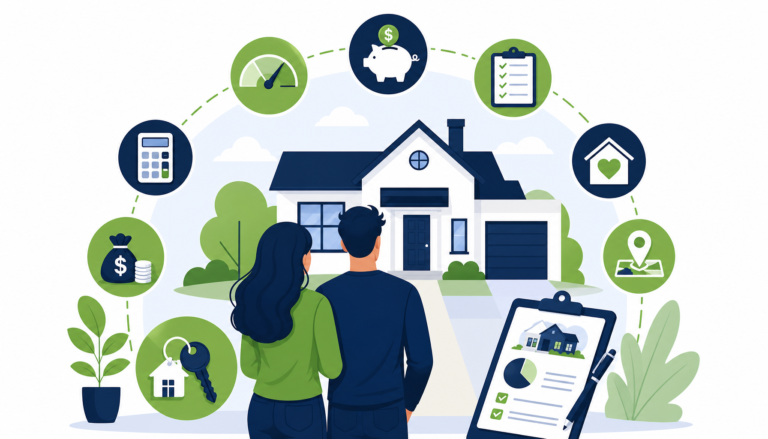
Don’t rely on generic advice — including this article. Run the numbers for your actual life. Here’s a simple framework:
- Find your all-in monthly cost to buy. Add up mortgage payment, property taxes, insurance, estimated maintenance, and HOA fees if applicable.
- Compare it to your rent. What would comparable housing cost you monthly as a renter?
- Calculate how long you’re staying. The longer you stay, the more buying tends to make sense.
- Factor in your opportunity cost. What could your down payment earn if invested instead?
- Check your credit. Your mortgage rate depends heavily on your credit score. A difference of even 0.5% on a 30-year mortgage can cost or save you tens of thousands of dollars. Tools like Credit Karma can show you your credit score for free and help you identify areas to improve before you apply for a loan.
Online calculators like the New York Times Rent vs. Buy Calculator are also genuinely useful for running these comparisons with your real local numbers.
Building Wealth Either Way: It’s Not All-or-Nothing
Here’s something the rent vs. buy debate often misses: you can build wealth as a renter. In fact, renters who diligently invest the difference between what they’d spend on a mortgage and what they pay in rent often come out ahead — especially in high-cost markets where home price appreciation is slow.
The key is intentionality. If you’re renting, don’t let the money you’re “saving” versus a mortgage just disappear into lifestyle inflation. Invest it. Contribute to your 401(k), build your Roth IRA, or open a brokerage account. The wealth-building power of compounding returns over 10–20 years is just as real as home equity — and it’s a lot more liquid.
Conversely, if you buy, don’t assume the home is doing all the work for you. Continue investing, avoid draining retirement accounts for home expenses, and treat the home as one part of your financial picture — not the whole thing.
Conclusion
The rent vs. buy decision in your 20s is less about what society says you should do and more about what your finances, your lifestyle, and your specific market actually support. In 2026, with mortgage rates still elevated and rental markets showing some softening, renting is genuinely a strong option for many young adults — not a consolation prize.
If you’re leaning toward buying, start by getting your financial foundation solid: pay down high-interest debt, build your emergency fund, and check your credit score (Credit Karma makes this free and easy). If you’re leaning toward renting, make a plan to invest the flexibility dividend you’re getting. Either way, the best move is an informed one.
Your next step: Pull up a rent vs. buy calculator for your city this week, plug in your real numbers, and see what the math actually says. You might be surprised by the answer.
Frequently Asked Questions
Is it always better to buy a home than rent in your 20s?
No — and anyone who tells you it’s always better to buy isn’t giving you the full picture. Buying makes sense when you’re financially stable, planning to stay long-term, and when the local market math works in your favor. Renting is the smarter move when you have debt to pay off, need flexibility, or are in a high price-to-rent-ratio market.
How much do I need saved before buying a home in my 20s?
At a minimum, you need a down payment (3–20% of the purchase price), closing costs (2–5% of the loan amount), and a separate emergency fund of 3–6 months of expenses. Don’t wipe out your savings entirely on the down payment — unexpected home repairs can be expensive and come at the worst times.
Does renting really mean throwing money away?
No. This is one of the most persistent myths in personal finance. Rent buys you a place to live, flexibility, and freedom from repair costs. Homeowners also “throw money away” on mortgage interest, property taxes, insurance, and maintenance — especially in the early years of ownership when most of your payment goes to interest, not equity.
How does my credit score affect renting vs. buying?
Your credit score matters in both cases, but it’s especially critical when buying. A higher credit score gets you a lower mortgage interest rate, which can save you tens of thousands over the life of a loan. You can check your credit score for free through Credit Karma to see where you stand before making any major financial decisions.
What’s the break-even point for buying vs. renting?
It varies by market, but the general rule is 5–7 years. If you sell before reaching your break-even point, you may actually lose money after factoring in transaction costs, closing costs, and the interest-heavy early years of your mortgage. Always run the numbers for your specific situation before deciding.