Best High Yield Savings Accounts in 2026: How to Make Your Money Work Harder
Your savings account might actually be losing you money right now. If you’re earning 0.01% APY at a traditional bank while inflation chips away at your purchasing power, it’s time to make a serious upgrade.
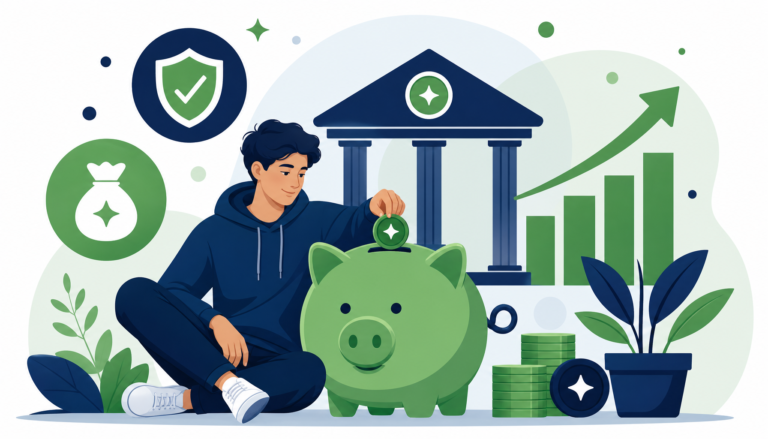
High yield savings accounts (HYSAs) have exploded in popularity over the last few years — and for good reason. They offer interest rates anywhere from 10 to 50 times higher than a standard savings account, with almost no extra effort on your part. Whether you’re building an emergency fund, saving for a vacation, or just trying to stop watching your money sit idle, a high yield savings account is one of the smartest, lowest-effort financial moves you can make in your 20s and 30s.
This guide breaks down how these accounts work, what to look for, and which ones are worth your attention right now.
What Is a High Yield Savings Account?
A high yield savings account is a type of savings account that pays a significantly higher annual percentage yield (APY) than the national average. As of 2026, the national average savings rate hovers around 0.45% APY. The best high yield savings accounts are currently offering rates between 4.50% and 5.25% APY — sometimes even higher depending on the institution and market conditions.
These accounts are typically offered by online banks and credit unions rather than traditional brick-and-mortar banks. Because online banks have lower overhead costs, they pass those savings on to you in the form of better interest rates. Your money is still FDIC insured (up to $250,000), so there’s no extra risk involved. You get the same protection as a regular savings account — just with a much better return.
Why the Account You Have Right Now Might Be Costing You
Here’s a quick example to put things in perspective. Say you have $10,000 sitting in a traditional savings account earning 0.01% APY. After one year, you’d earn exactly $1 in interest. Now put that same $10,000 in a high yield savings account earning 5.00% APY, and you’d earn $500 in interest over the same period.
That’s $499 you’re leaving on the table every year by staying with your old bank out of habit or convenience. Over three to five years, that gap compounds into real money. For young adults who are just starting to build wealth, those extra dollars matter. Every bit of passive growth helps you hit your goals faster — whether that’s a down payment on a house, a fully funded emergency fund, or just financial breathing room.
What to Look for in the Best High Yield Savings Accounts
Not all high yield savings accounts are created equal. Before you open one, here’s what you should be comparing:
APY (Annual Percentage Yield): This is the most important number. Look for a competitive rate, but understand that rates fluctuate with the federal funds rate. A promotional rate that drops after 90 days isn’t as valuable as a consistently competitive one.
Minimum balance requirements: Some accounts require you to maintain a minimum balance to earn the top APY or to avoid fees. The best accounts have no minimums or very low ones.
Fees: Monthly maintenance fees will eat into your interest gains. Look for accounts with zero monthly fees.
Access to your money: Check how easy it is to transfer funds to your checking account. Most online banks allow ACH transfers, but timing can vary from one to three business days.
FDIC or NCUA insurance: Always confirm your deposits are insured. FDIC covers banks; NCUA covers credit unions. Both provide the same $250,000 protection per depositor.
Mobile app and user experience: Since you’ll be banking online, the app matters. Look for an intuitive interface, mobile check deposit, and solid customer support.
Top High Yield Savings Accounts Worth Considering in 2026
The landscape for high yield savings accounts is competitive, and several institutions consistently rise to the top. Here’s a look at some of the standout options this year:
Marcus by Goldman Sachs is one of the most well-known online savings options. It offers competitive APY with no fees, no minimum deposit, and a clean user experience. It’s a reliable pick for people who want a straightforward account without any gimmicks.
Ally Bank has built a loyal following among younger savers thanks to its excellent mobile app, no minimum balance, and features like savings “buckets” that let you organize money toward different goals within a single account. It also offers 24/7 customer service, which is a real differentiator in the online banking world.
SoFi Checking and Savings combines a high yield savings account with a checking account, which makes it convenient to manage everything in one place. SoFi members who set up direct deposit can unlock some of the highest APYs available. It also offers cash bonuses for new members from time to time.
Discover Online Savings is another top contender. Discover offers no fees, no minimums, and consistently competitive rates. Its app is solid and the brand has strong name recognition, which gives some users peace of mind.
LendingClub High-Yield Savings has gained traction for its competitive rates and no-fee structure. It’s worth adding to your comparison list if you’re shopping around.
Rates change frequently, so always verify the current APY before opening an account. A quick Google search with today’s date will give you the most up-to-date numbers.
How to Actually Open a High Yield Savings Account
The process is simpler than most people expect. Here’s a step-by-step overview:
- Compare your options. Use a comparison tool or site to look at current APYs, fees, and features side by side. This step takes about 15–20 minutes and is worth doing properly.
- Choose your account. Pick the one that fits your needs — whether that’s the highest rate, best app, or most flexible access to your money.
- Gather your information. You’ll need your Social Security number, a government-issued ID, and your current bank’s routing and account numbers to link it for transfers.
- Open the account online. Most applications take under 10 minutes. You’ll verify your identity and set up your login.
- Fund your account. Transfer money from your existing checking or savings account. Most banks allow you to start with as little as $1.
- Set up automatic transfers. The easiest way to build savings is to automate it. Set a recurring weekly or monthly transfer so you’re consistently adding to your balance without having to think about it.
One helpful tool when you’re starting out: Credit Karma lets you check your credit score for free and also offers financial product recommendations based on your profile — including savings accounts that might be a good fit for where you are financially. If you haven’t already set up a free account, it’s a useful resource to have in your corner as you start making smarter money moves.
Common Mistakes to Avoid With High Yield Savings
Even with a simple product like a high yield savings account, there are a few traps worth avoiding.
Chasing the highest rate without reading the fine print. A 6.00% APY sounds great until you realize it’s only for the first three months, or it requires a $25,000 minimum balance. Always read the terms.
Keeping too much cash in savings. A high yield savings account is great for short-term goals and emergency funds, but it’s not the right vehicle for long-term wealth building. Once you have three to six months of expenses saved, any extra cash should be going toward a Roth IRA, index funds, or other investment accounts.
Ignoring rate changes. The APY on these accounts isn’t fixed. As the Federal Reserve adjusts interest rates, your bank will likely follow. Make it a habit to check your rate every few months and compare it to competitors.
Forgetting it exists. Some people open a high yield savings account and then neglect it. Set calendar reminders to review your balance and rate quarterly.
How Much Should You Keep in a High Yield Savings Account?
For most people in their 20s and 30s, the sweet spot is three to six months of living expenses. This is your emergency fund — money that’s accessible quickly if you lose your job, have a medical expense, or face an unexpected car repair.
Beyond that, it depends on your goals. If you’re saving for something specific in the next one to three years — a wedding, a down payment, a big trip — a high yield savings account is a smart place to park that money because it’s not exposed to market risk and it’s earning meaningful interest.
For anything you won’t need for five or more years, that money is better off invested. A high yield savings account beats a mattress or a regular savings account, but it won’t outpace inflation over the long run the way a diversified investment portfolio can.
Conclusion
The best high yield savings accounts give your money a job instead of letting it collect dust. Opening one takes less than 30 minutes, costs nothing, and could earn you hundreds of dollars a year in passive interest — simply by making a switch.
Your next step is simple: pick one account from the options in this guide, open it today, and set up an automatic transfer from your checking account for whatever amount you can comfortably commit to. Even $25 a week adds up. The hardest part is starting, and you’ve already done the research.
Frequently Asked Questions
Are high yield savings accounts safe?
Yes. As long as the bank or credit union is FDIC or NCUA insured, your deposits are protected up to $250,000 per depositor. These accounts carry the same level of protection as a standard savings account at any traditional bank.
Can I lose money in a high yield savings account?
No, not from market fluctuations. The only way your balance would decrease is if you withdraw money or if a fee is charged. Unlike investment accounts, high yield savings accounts don’t expose your principal to market risk.
Do high yield savings account rates change?
Yes. APYs on these accounts are variable, meaning they move with the broader interest rate environment. When the Federal Reserve raises rates, HYSAs tend to pay more. When rates are cut, the APYs typically drop. This is why it’s worth comparing rates periodically.
Is there a limit to how much I can deposit?
Most banks don’t cap how much you can deposit, but FDIC insurance only covers up to $250,000 per depositor, per institution. If you have more than that to save, consider spreading it across multiple insured institutions.
Can I use a high yield savings account as my main account?
It’s not ideal. High yield savings accounts aren’t designed for daily spending. They typically don’t come with a debit card, and there may be limits on how many withdrawals you can make per month. The best setup is to use a checking account for day-to-day spending and a HYSA for saving goals and your emergency fund.