How to Save Money on a Low Income (Practical Tips That Actually Work)
Saving money when you’re barely covering rent, groceries, and your phone bill can feel like a cruel joke. But here’s the truth: building savings on a low income is possible, and it doesn’t require giving up everything you enjoy.
The key is working smarter with what you already have. Instead of following generic advice designed for people with disposable income, this guide breaks down real strategies that fit tight budgets — whether you’re making $25,000 a year or navigating a period of financial uncertainty. Let’s get into it.
Understand Where Your Money Is Actually Going
Before you can save anything, you need to know where your money disappears each month. Most people massively underestimate their spending in at least one category — usually food, subscriptions, or impulse buys.
Start by tracking every dollar you spend for two to four weeks. You don’t need a fancy app to do this. A free notes app or spreadsheet works fine. Write down every purchase: coffee, gas, a $1.99 song download, everything.
Once you have a clear picture, sort your spending into three buckets:
- Needs — rent, utilities, groceries, transportation, minimum debt payments
- Wants — dining out, streaming services, clothing beyond basics
- Wasted — subscriptions you forgot about, fees you didn’t notice, expired deals
Most people find at least $50–$100 in the “wasted” bucket almost immediately. That’s your first savings opportunity, and it costs you nothing in lifestyle changes.
Build a Bare-Bones Budget That Still Feels Human
The word “budget” triggers dread for most people because they associate it with deprivation. Reframe it: a budget is just a spending plan that puts you in control instead of your bank account controlling you.
For low-income earners, the 50/30/20 rule often doesn’t work as-is because needs eat up more than 50% of the paycheck. That’s okay. Adjust it to what’s realistic for you — maybe it’s 70/20/10, where 70% goes to needs, 20% to wants, and 10% to savings.
Even saving 5–10% of your income is a win when you’re starting from nothing. Here’s a simple way to structure it:
- List your fixed monthly expenses (rent, insurance, phone)
- Subtract them from your monthly take-home pay
- Allocate what’s left across groceries, transportation, and savings first — then treat yourself with whatever remains
The goal isn’t perfection. It’s consistency over time.
Cut the Costs That Drain You Without You Noticing
Recurring small expenses are the silent killers of low-income budgets. A $14.99 streaming service here, a $9.99 music app there, and suddenly $60–$80 is gone before you’ve bought a single grocery item.
Do a subscription audit right now. Pull up your bank or credit card statement and highlight every recurring charge. Then ask yourself: Have I used this in the last 30 days? If the answer is no, cancel it today.
Other low-effort ways to cut spending:
- Switch to a cheaper phone plan. Carriers like Mint Mobile or Visible offer solid service for $15–$35 a month — a fraction of what major carriers charge.
- Negotiate your bills. Call your internet provider and ask for a lower rate or a promotional plan. This works more often than people expect.
- Use the library. Free books, audiobooks, movies, and even museum passes in many cities. If you’re paying for Audible or Kindle Unlimited, this is an easy swap.
- Cook more, order less. The average American spends over $3,000 a year on restaurants. Even cutting that in half frees up $1,500 annually — that’s $125 a month back in your pocket.
Know Your Credit Score and Use It to Save Money
Here’s something most people don’t think about: your credit score directly affects how much you pay for things. A low credit score means higher interest rates on loans, credit cards, and sometimes even higher deposits for apartments or utilities. That’s real money leaving your wallet.
If you haven’t checked your credit score recently, do it for free through Credit Karma. It gives you access to your TransUnion and Equifax scores at no cost, with no credit card required. More importantly, it explains what’s dragging your score down and offers personalized tips to improve it.
Even if credit feels irrelevant right now, improving your score over time means qualifying for better rates when you need a car loan, apartment, or eventually a mortgage. On a low income, every dollar of interest saved matters — and Credit Karma makes it easy to start without any financial risk.
Find Ways to Spend Less on Groceries Without Eating Badly
Food is one of the biggest variable expenses in any budget, and it’s one of the best places to save without dramatically changing your quality of life.
A few approaches that genuinely work:
Meal plan before you shop. Decide what you’re eating for the week, write out exactly what you need, and only buy that. Impulse purchases at grocery stores cost the average shopper hundreds extra per year.
Buy staples in bulk. Rice, oats, dried beans, lentils, frozen vegetables, and pasta are cheap, nutritious, and go a long way. A $10 bag of rice can cover multiple meals across a week.
Use cashback apps. Apps like Ibotta and Fetch Rewards give you cash back on everyday grocery purchases. It’s not life-changing money, but $10–$30 a month adds up to real savings over time.
Shop sales and use store brands. Generic brands are almost always manufactured by the same companies as name brands. You’re paying for packaging, not quality.
Don’t shop hungry. This sounds basic, but shopping on an empty stomach is scientifically proven to increase impulse purchases. Eat before you go.
Automate Your Savings So You Stop Relying on Willpower
One of the biggest reasons people fail to save on a low income isn’t laziness — it’s that saving requires making the right decision over and over again. Automating removes that friction.
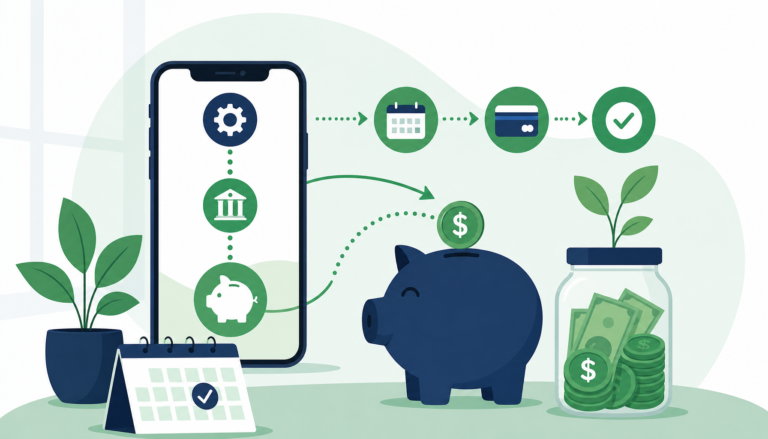
Set up an automatic transfer from your checking account to a savings account on the same day your paycheck hits. Even if it’s just $10 or $25 per paycheck, you’re building the habit and the account balance at the same time.
The trick is to treat savings like a bill. You don’t skip your rent payment because you don’t feel like paying it. Apply the same logic to savings. It leaves your account before you can spend it, and within a few months, you won’t even miss it.
If your employer offers direct deposit, some banks allow you to split your paycheck into multiple accounts automatically. Check if yours does — it’s the easiest version of this strategy.
A high-yield savings account will also earn you more interest than a traditional savings account. Many online banks like Marcus by Goldman Sachs or Ally offer rates significantly above the national average with no minimum balance required. This is especially useful while you’re building an emergency fund.
Build an Emergency Fund Before Anything Else
If you’re on a low income and something goes wrong — a car repair, a medical bill, a job disruption — without a financial cushion, you’re forced to go into debt. That debt then makes it even harder to get ahead. It’s a trap that keeps millions of people stuck.
Your first savings priority should be a small emergency fund. Start with a $500 goal. That’s enough to handle most common financial surprises without reaching for a credit card.
Once you hit $500, push toward one month of essential expenses. Over time, work toward three months. This isn’t something that happens overnight, but having even a small buffer changes your entire relationship with money and removes constant low-grade financial anxiety.
Here’s how to build it faster:
- Put any unexpected money (birthday cash, tax refunds, side hustle income) directly into the fund
- Sell things you don’t use on Facebook Marketplace or OfferUp
- Pick up one-time gigs through platforms like TaskRabbit or Instacart during a slow week
Every little bit counts, and reaching that first $500 milestone will feel like a genuine turning point.
Conclusion
Saving money on a low income isn’t about doing one big dramatic thing — it’s about making a series of small, consistent moves that compound over time. Track your spending, trim what’s wasted, automate your savings, and protect yourself with an emergency fund first.
The next step is simple: open your bank statement right now and do a subscription audit. Cancel anything you haven’t used in 30 days and move that money to savings this week. That’s it. One action, done today, and you’ve already started.
If you haven’t checked your credit score in a while, sign up for Credit Karma at no cost and see exactly where you stand. Small wins like these build the momentum that makes everything else easier.
Frequently Asked Questions
How much should I save if I’m on a low income?
There’s no magic number. Start with whatever you can — even $10 per paycheck. The habit matters more than the amount in the beginning. As your income grows or your expenses shrink, increase the amount gradually. A realistic early goal is saving 5–10% of your take-home pay.
What’s the fastest way to save money with a tight budget?
The fastest wins usually come from cutting recurring expenses you’ve forgotten about — unused subscriptions, overpriced phone plans, or habits like daily takeout. Doing a spending audit for one month typically reveals $50–$150 in cuttable expenses for most people.
Is it worth saving money if I have debt?
Yes — especially before building a large savings balance, focus on keeping a small emergency fund ($500–$1,000) while paying off high-interest debt. Without any savings cushion, any unexpected expense will push you further into debt. Balance both rather than ignoring one completely.
How do I stop living paycheck to paycheck?
The cycle usually breaks when you create even a small financial buffer. Start by automating a small savings transfer each payday, cut at least one recurring expense, and build a $500 emergency fund as your first goal. Over two to three months, you’ll start feeling less financially reactive.
Can I really save money on a minimum wage salary?
It’s harder, but yes. The most important moves are controlling your biggest expenses (housing and food), eliminating waste, and looking for ways to increase income through side work or employer benefits you might not be using. Many people have built meaningful savings starting from minimum wage by staying consistent with small amounts over time.