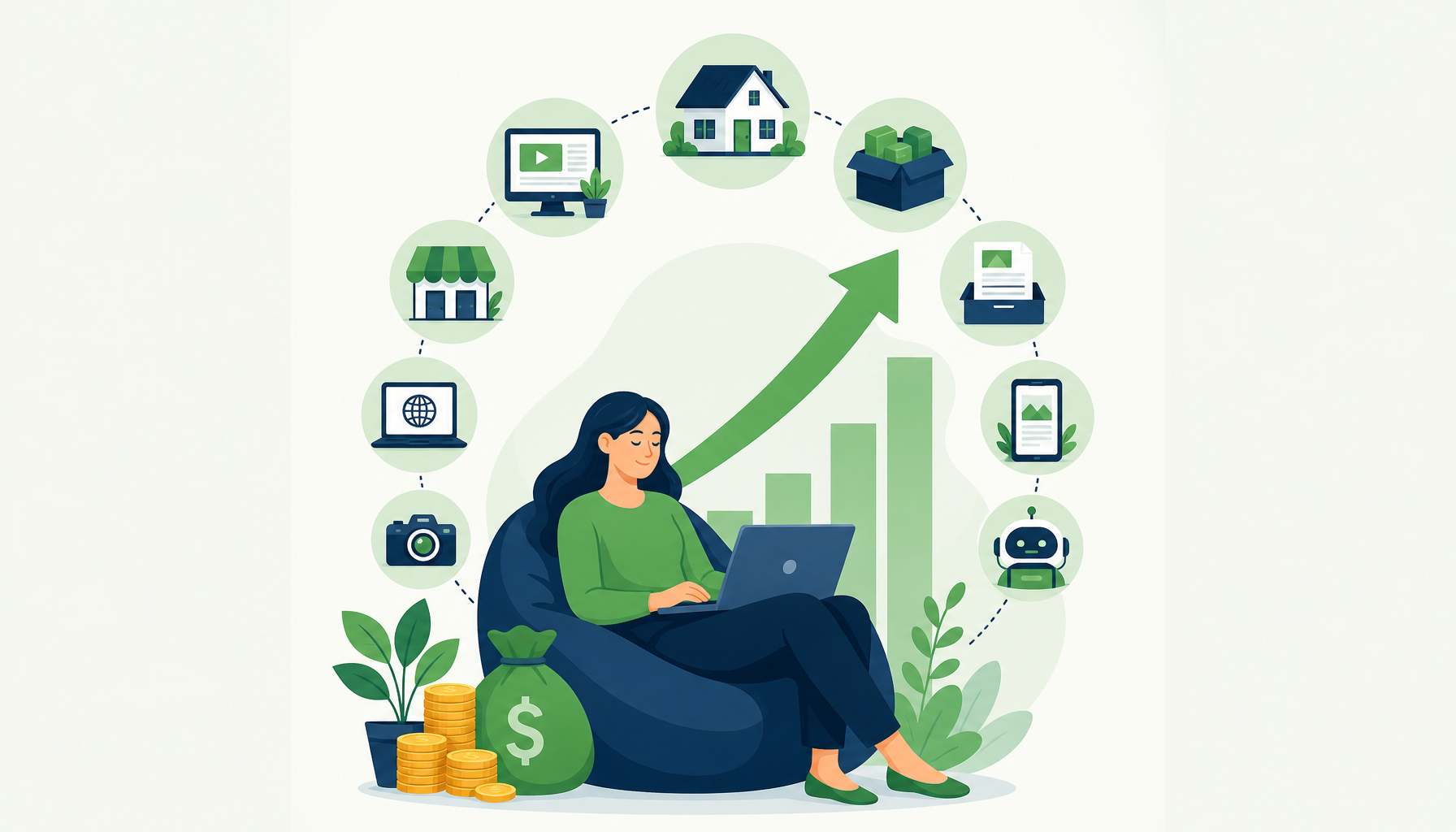
Passive Income Ideas for Beginners: 10 Real Ways to Earn More in 2026
Most people think passive income is only for the wealthy — but in 2026, anyone with a smartphone and a few hours a week can start building income streams that work while they sleep. Whether you want to pay off debt faster, save for a big goal, or just stop living paycheck to paycheck, passive income is one of the most powerful tools in your financial toolkit.
The idea sounds almost too good to be true: earn money without trading every hour for a dollar. But passive income is real, and it’s more accessible than ever. The catch? Most passive income strategies do require some upfront effort — time, money, or both. The good news is that even beginners can start small and scale up. Here’s everything you need to know to get started in 2026.
What Passive Income Actually Means (And What It Doesn’t)
Let’s clear something up before diving in. Passive income is not “doing nothing and getting paid.” It’s income that doesn’t require you to actively show up every hour to earn it. Once the system is set up, it runs with minimal ongoing effort.
Think of it like planting a fruit tree. You put in work upfront — planting, watering, waiting — but eventually the tree produces fruit season after season without starting over. Compare that to a regular job, where you only get paid when you show up.
True passive income streams can include things like dividends from stocks, royalties from a digital product, or rental income from a property. Semi-passive income — which requires occasional upkeep — includes things like running a blog, managing a print-on-demand store, or renting out your car. Both are legitimate, especially for beginners.
Why 2026 Is a Great Time to Start Building Passive Income
The financial landscape has shifted dramatically in favor of everyday earners. High-yield savings accounts are still offering competitive rates. Micro-investing apps have made the stock market accessible with as little as $1. Digital product platforms are easier to use than ever. And the creator economy continues to grow, opening doors for people who want to monetize their knowledge or creativity.
If you’re between 18 and 35, time is your biggest asset. The earlier you start, the more compound growth and momentum work in your favor. Even starting with $50 a month invested consistently can grow into tens of thousands of dollars over a decade. There’s no better time to start than right now.
High-Yield Savings Accounts and Cash Parking
This is the easiest passive income idea for beginners — bar none. A high-yield savings account (HYSA) lets your money earn significantly more interest than a traditional bank account, with zero risk to your principal.
In 2026, many online banks and credit unions are offering annual percentage yields (APYs) between 4% and 5%. That means if you park $5,000 in a HYSA, you could earn $200–$250 per year just for letting it sit there.
To find the best rates and understand your current credit standing before opening new financial accounts, tools like Credit Karma can be incredibly useful. Credit Karma lets you check your credit score for free, compare financial products side by side, and even see personalized recommendations for savings accounts and financial tools — all without hurting your credit. It’s a smart first step for any beginner trying to set up a stronger financial foundation.
This isn’t going to make you rich overnight, but it is genuinely passive and risk-free. For anyone with an emergency fund or short-term savings just sitting in a regular checking account, moving it to a HYSA is one of the simplest wins available.
Dividend Investing for Beginners
Dividend investing is one of the most time-tested passive income strategies out there. When you buy shares of dividend-paying stocks or exchange-traded funds (ETFs), companies pay you a portion of their profits on a regular basis — usually quarterly.
You don’t need thousands of dollars to get started. Apps like Robinhood, Fidelity, and Charles Schwab allow fractional investing, so you can buy a slice of a dividend-paying stock for as little as $1. Over time, reinvesting those dividends through a Dividend Reinvestment Plan (DRIP) compounds your returns automatically.
For beginners, dividend-focused ETFs like those that track the S&P 500 or specifically target dividend-paying companies offer built-in diversification. You’re not betting everything on one company — your risk is spread across dozens or hundreds of stocks.
The key here is consistency. Investing a set amount every month — even $25 or $50 — builds a portfolio slowly and steadily. Don’t expect huge checks right away, but after a few years, dividend income starts to add up in a meaningful way.
Selling Digital Products and Printables
If you have any kind of skill — design, writing, teaching, organizing — you can package that knowledge into a digital product and sell it over and over again with no inventory and no shipping.
Popular digital products for beginners include:
- Canva templates for social media, resumes, or presentations
- Budget spreadsheets or financial trackers
- eBooks or guides on topics you know well
- Lightroom presets for photography
- Notion templates for productivity
Platforms like Etsy, Gumroad, and Payhip make it easy to set up a storefront and start selling. Once your product is listed, each sale requires no extra work from you. The upfront effort is creating the product and writing good descriptions — after that, it can sell indefinitely.
The barrier to entry is low, and the profit margins are high since there are no production costs. Even a $10 Canva template that sells 20 times a month generates $200 in passive income.
Affiliate Marketing Through Content
Affiliate marketing means earning a commission when someone makes a purchase through a unique link you share. If you run a blog, YouTube channel, TikTok account, or even just a niche Pinterest page, affiliate marketing can turn your content into income.
You sign up for affiliate programs — Amazon Associates, ShareASale, Impact, or brand-specific programs — and embed links into your content. When someone clicks and buys, you get a percentage of the sale. You never handle inventory, customer service, or shipping.
The most successful beginners in affiliate marketing pick a focused niche they genuinely care about — personal finance, fitness, cooking, travel on a budget — and create content that answers real questions people are searching for. SEO (search engine optimization) plays a big role here: content that ranks on Google brings in consistent traffic without you having to promote it every day.
It does take time to build traction, but once your content is live and optimized, it can generate commissions for months or years with minimal updates.
Renting Out What You Already Own
You don’t need to buy a rental property to earn passive income from assets. In 2026, the sharing economy makes it possible to rent out things you already own.
Here are a few practical options:
- Your car: Platforms like Turo let you rent out your vehicle when you’re not using it. A car sitting in a driveway can earn $300–$800 per month depending on your location and the vehicle.
- A spare room or space: If you rent or own a home with extra space, Airbnb or Furnished Finder can turn that room into income. Even renting a parking spot or storage space through platforms like Neighbor.com can bring in $50–$200 per month.
- Camera gear, tools, or equipment: Platforms like Fat Llama allow you to rent out expensive gear to people who need it short-term.
This strategy works best if you already own the asset and it’s sitting idle. The income can feel surprisingly significant for very little ongoing effort.
Creating a Course or Monetizing Knowledge
If you know something — really know it — other people are willing to pay to learn it faster than they could on their own. Online courses have exploded in popularity, and platforms like Teachable, Udemy, and Skillshare make it genuinely beginner-friendly to create and sell a course.
Your course doesn’t need to be about something profound. It could be how to manage a household budget, how to use Excel for beginners, how to cook five meals for under $30, or how to start freelancing. Practical, actionable knowledge sells.
Creating the course is the hard part — recording videos, writing scripts, editing content. But once it’s published, each enrollment generates income without additional effort. Udemy in particular runs ongoing promotions that put your course in front of millions of learners without you lifting a finger after publishing.
YouTube is another path to monetized knowledge. While it takes time to reach YouTube’s monetization threshold (1,000 subscribers and 4,000 watch hours), once you qualify, ad revenue flows in passively as old videos continue to rack up views.
Conclusion: Start Small, Stay Consistent
Passive income isn’t a get-rich-quick scheme — it’s a long game. But the biggest mistake beginners make is waiting until conditions are perfect before starting. In 2026, the tools, platforms, and opportunities are already in your hands.
Start with one strategy that fits your current situation. If you have some savings, open a high-yield savings account and move your emergency fund there today. If you have a skill, spend a weekend creating a digital product. If you have a car you barely drive, list it on Turo and see what happens.
Every passive income stream starts with a single decision to begin. Pick one idea from this list, commit to taking one concrete action this week, and build from there. Your future self — the one with multiple income streams and a lot less financial stress — will be glad you started now.
Frequently Asked Questions
How much money do I need to start earning passive income?
It depends on the strategy. Some options — like selling digital products or starting a blog — require very little money upfront, just time and effort. Others, like dividend investing, can start with as little as $1 using fractional shares. You don’t need to be rich to start; you just need to start.
How long does it take for passive income to kick in?
Again, it varies. A high-yield savings account starts earning interest immediately. Dividend investing builds over months and years. A digital product on Etsy could make its first sale within days or take a few months of tweaking. Affiliate marketing through SEO content can take six months to a year before generating consistent commissions. Patience is part of the process.
Is passive income taxable?
Yes. Most forms of passive income are subject to taxes, though the rates vary depending on the type. Dividends may qualify for lower qualified dividend tax rates. Rental income, course sales, and affiliate commissions are typically reported as ordinary income or self-employment income. It’s smart to set aside a portion of your earnings and consult a tax professional as your passive income grows.
Can I build passive income while working a full-time job?
Absolutely — and that’s exactly how most people do it. The goal is to use your current job income to fund and build passive streams on the side. Even dedicating a few hours per week consistently can lead to meaningful results over time. Many of the strategies listed here require minimal ongoing maintenance once established.
What’s the biggest mistake beginners make with passive income?
Trying to do everything at once. Beginners often get excited, start five different income streams simultaneously, and burn out before seeing results from any of them. Pick one strategy, execute it fully, and only add a second stream once the first is producing results. Focus beats multitasking every time.