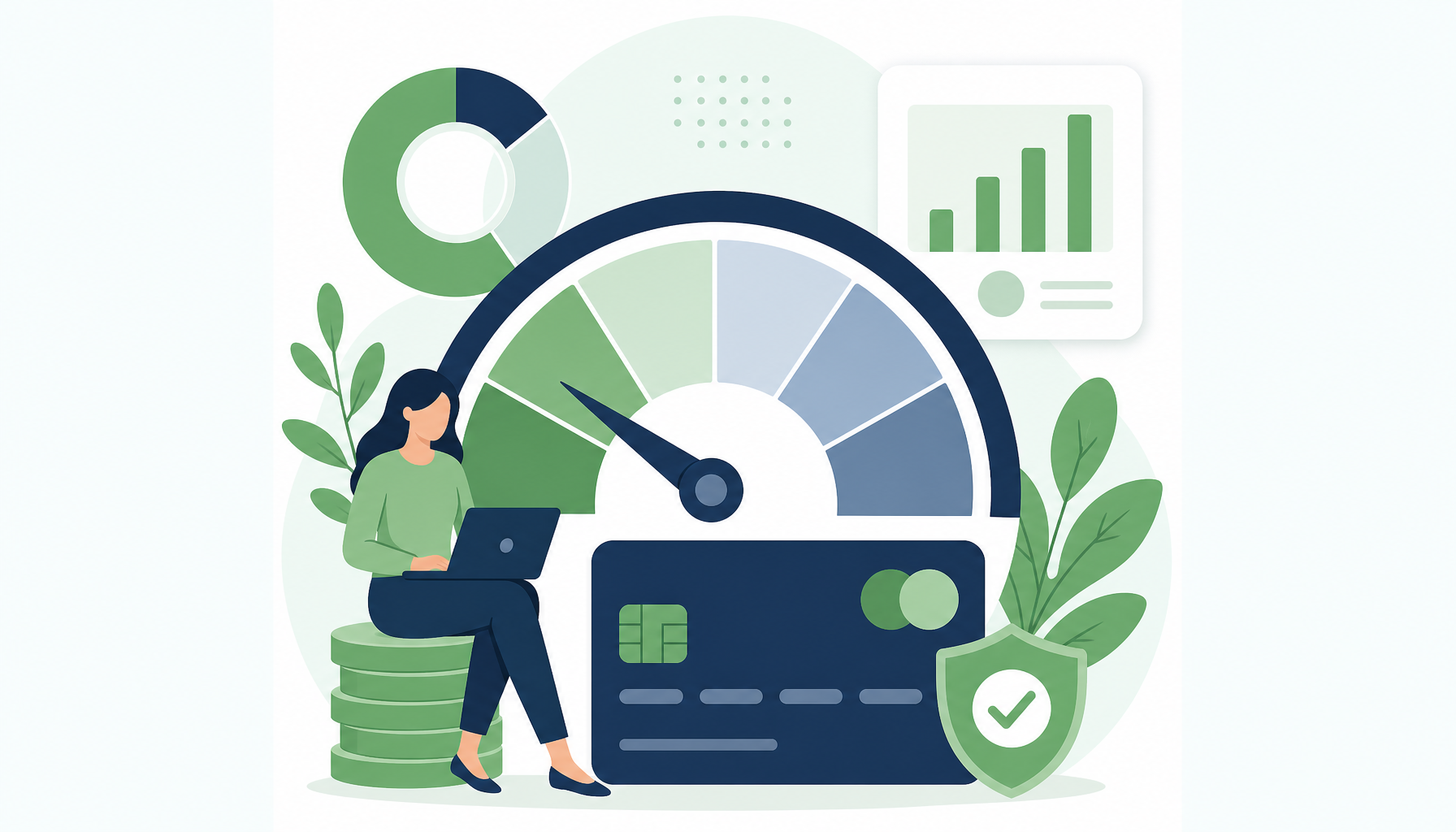
What Is a Credit Utilization Ratio and Why It Matters for Your Credit Score
Your credit score can make or break your ability to get an apartment, a car loan, or even a job — and your credit utilization ratio is one of the biggest factors controlling it. If you’ve never heard of it before, you’re not alone, but understanding it could be the fastest way to improve your credit score starting today.
What Is a Credit Utilization Ratio?
Your credit utilization ratio is the percentage of your total available revolving credit that you’re currently using. In simpler terms, it compares how much credit card debt you’re carrying to how much credit you actually have access to.
Here’s the basic formula:
Credit Utilization Ratio = (Total Credit Card Balances ÷ Total Credit Limits) × 100
So if you have one credit card with a $1,000 limit and you’ve charged $300 to it, your credit utilization ratio is 30%. That’s considered the upper boundary of what’s acceptable by most credit scoring standards.
This number shows lenders how responsibly you’re managing the credit you’ve been given. The lower your utilization, the more you look like someone who uses credit wisely — and the better it reflects on your credit score.
Why Your Credit Utilization Ratio Affects Your Credit Score So Much
Credit utilization is the second most important factor in your FICO credit score, accounting for roughly 30% of the total calculation. Only your payment history, which makes up 35%, carries more weight. That means your utilization ratio has a bigger impact than the length of your credit history, your credit mix, or how many new accounts you’ve opened.
Credit bureaus — Equifax, Experian, and TransUnion — receive balance and limit information from your card issuers on a regular basis, often monthly. Whatever balance is reported at that time is what’s used to calculate your ratio. This means your utilization can fluctuate month to month depending on how much you’re spending and when payments are made.
The takeaway here is that even if you pay your bill in full every month, a high balance at the time of reporting can temporarily drag your score down. Timing matters more than most people realize.
What Is a Good Credit Utilization Ratio in 2026?
Most financial experts agree that keeping your credit utilization ratio below 30% is a solid benchmark. But in 2026, with credit scoring models becoming more sophisticated and competitive lending markets, aiming for below 10% is where the real score benefits kick in.
Here’s a rough breakdown of how different utilization rates tend to affect your score perception:
- Under 10%: Excellent — lenders love this
- 10%–29%: Good — generally safe territory
- 30%–49%: Fair — starting to raise flags
- 50%–74%: Poor — actively hurting your score
- 75% or above: Very poor — major red flag to lenders
It’s also worth noting that a utilization rate of 0% — meaning you never carry any balance — isn’t always ideal either. Lenders like to see that you’re using credit, just not overusing it. Keeping a small, manageable balance or making regular purchases you pay off quickly shows active and responsible usage.
How to Calculate Your Credit Utilization Ratio
Calculating your own ratio is straightforward. Follow these steps:
- Add up all your credit card balances. Include every card you have, even store cards and secured cards.
- Add up all your credit limits. Use the maximum credit limit on each card.
- Divide total balances by total limits.
- Multiply by 100 to get your percentage.
For example, if you have three cards:
- Card A: $200 balance, $1,000 limit
- Card B: $500 balance, $2,000 limit
- Card C: $0 balance, $1,500 limit
Your total balance is $700 and your total limit is $4,500. That gives you a utilization ratio of about 15.6% — which is in solid territory.
One thing many people overlook is that lenders also look at per-card utilization, not just your overall ratio. Even if your overall utilization is low, maxing out a single card can still negatively affect your score. Try to keep each individual card under 30%.
Common Mistakes That Spike Your Credit Utilization
A lot of young adults unknowingly tank their credit utilization without realizing it. Here are the most common traps to avoid:
Closing old credit cards. When you close a card, you lose that card’s credit limit, which instantly shrinks your total available credit. If you still have balances on other cards, your utilization ratio jumps overnight. Before closing any card, think about how it will affect your numbers.
Only making the minimum payment. Minimum payments barely reduce your balance. If you’re carrying high balances and only paying the minimum, your utilization stays high month after month and you’re racking up interest on top of it.
Putting all your spending on one card. Even if you have multiple cards, concentrating all your purchases on one can push that card’s utilization dangerously high — even if your overall ratio looks fine.
Not knowing your credit limit. Some people simply don’t know what their limits are, making it impossible to manage utilization strategically. Log in to your accounts and know your numbers.
How to Lower Your Credit Utilization Ratio Fast
If your utilization is too high right now, there are several moves you can make in 2026 to bring it down relatively quickly:
Pay down balances more aggressively. This is the most direct fix. Even paying more than the minimum — or making multiple payments in a month — can reduce the balance that gets reported to the bureaus.
Ask for a credit limit increase. If you have a history of on-time payments, many issuers will raise your limit. A higher limit with the same balance automatically lowers your ratio. Just avoid using that extra space as an excuse to spend more.
Spread spending across multiple cards. Instead of maxing out one card, distribute your monthly spending across two or three cards to keep per-card utilization in check.
Time your payments before the statement closes. Find out when your credit card issuer reports to the bureaus — often around your statement closing date — and pay down your balance before that date. This reduces the balance that gets reported even if you plan to spend again after.
Open a new card strategically. A new card adds more available credit to your total, which lowers your overall utilization. However, this also results in a hard inquiry and temporarily shortens your average account age, so weigh the trade-offs carefully.
One free tool that makes it easy to monitor your utilization in real time is Credit Karma. It lets you see your credit score, your current utilization ratio, and how changes in your balance or limits might affect your score — all without impacting your credit. If you’re not already using it, it’s one of the smartest free resources available for anyone building or rebuilding their credit in 2026.
How Credit Utilization Interacts With Other Parts of Your Credit Score
Understanding credit utilization doesn’t exist in a vacuum. It works alongside every other factor in your credit profile to paint a full picture for lenders.
Your payment history is still king — no amount of low utilization will overcome a record of missed payments. But if your payment history is clean and your utilization is low, you’re in excellent shape for most lending scenarios.
Your credit age also plays into this. Longer credit histories give lenders more data to evaluate you with. This is one reason closing old accounts — even inactive ones — can be risky. You’re not just losing a credit limit; you’re potentially shortening your average account age at the same time.
New credit inquiries and your credit mix (having both revolving credit like cards and installment loans like a car loan) round out the remaining factors. Think of your credit score as a team sport — every position matters, but some players, like payment history and utilization, have an outsized impact on the outcome.
Conclusion
Your credit utilization ratio is one of the fastest-moving numbers in your financial life — it can shift significantly within a single billing cycle, which means you have real power to improve it quickly. The goal is simple: keep your balances low relative to your limits, pay on time, and track your progress consistently.
If you’ve been ignoring your credit utilization up until now, 2026 is a great time to change that. Start by logging into your credit card accounts today, adding up your balances and limits, and calculating where you stand. Then make a plan to get that number below 30% — and ideally below 10% — as a first step toward a stronger financial future.
Frequently Asked Questions
What is a good credit utilization ratio?
Most experts recommend keeping your credit utilization ratio below 30%. However, for the best impact on your credit score, aim for below 10%. The lower your utilization, the more favorably lenders view your credit management habits.
Does paying my credit card in full help my credit utilization?
It depends on timing. If your issuer reports your balance to the credit bureaus before your payment is processed, a high balance could still affect your utilization for that month. Try paying down your balance before your statement closing date for the best results.
Can I have a 0% credit utilization ratio?
Technically yes, but it’s not always recommended. If your cards show no activity at all, some scoring models may not count them, which could affect your overall score. Light, regular use that you pay off promptly is generally better than zero usage.
Does closing a credit card hurt my credit utilization?
Yes. Closing a card removes that card’s credit limit from your total available credit. If you still have balances on other cards, your utilization ratio increases immediately. Think carefully before closing any card, especially an older one.
How often does my credit utilization ratio change?
Your credit utilization ratio can change every time your card issuer sends updated balance and limit information to the credit bureaus, which typically happens monthly around your statement closing date. This means your ratio can shift up or down relatively quickly as your balances change.