What Is Dollar Cost Averaging? The Beginner’s Guide to Investing Smarter in 2026
Most people avoid investing because they think you need perfect timing — but there’s a smarter, stress-free way to grow your money. Dollar cost averaging is the strategy that takes the guesswork out of investing, and in 2026, it’s more accessible than ever for young adults just getting started.
What Is Dollar Cost Averaging?
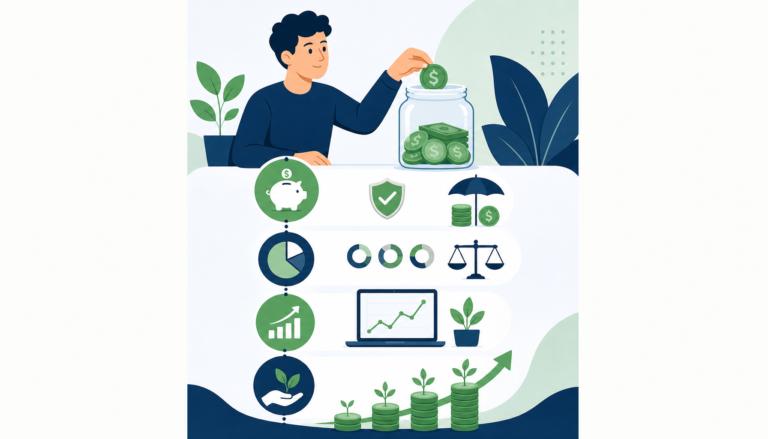
Dollar cost averaging (DCA) is an investment strategy where you invest a fixed amount of money at regular intervals — say, $50 every week or $200 every month — regardless of what the market is doing. Instead of trying to buy stocks or funds at the “perfect” low price, you just keep investing consistently over time.
The name comes from the effect this creates: because you’re always investing the same dollar amount, you automatically buy more shares when prices are low and fewer shares when prices are high. Over time, this averages out your cost per share, which can lead to better returns than trying to time the market — something even professional investors consistently fail to do.
Think of it like filling up your gas tank every Monday no matter what gas costs. Some weeks you get more gallons, some weeks fewer — but you never go without gas, and you don’t stress about the price.
How Dollar Cost Averaging Works: A Simple Example
Let’s say you invest $100 every month into an index fund. Here’s what three months might look like:
- Month 1: Share price is $20 → you buy 5 shares
- Month 2: Share price drops to $10 → you buy 10 shares
- Month 3: Share price rises to $25 → you buy 4 shares
After three months, you’ve invested $300 total and own 19 shares. Your average cost per share is about $15.79 — lower than the current price of $25. If you had tried to time the market and only invested in month 3, you would have bought just 12 shares with that same $300.
This is the power of dollar cost averaging. You didn’t need to predict anything. You just showed up consistently and let the math work in your favor.
Why Dollar Cost Averaging Is Perfect for Beginners in 2026
If you’re new to investing, the market can feel overwhelming. Headlines in 2026 are still full of volatility, uncertainty, and conflicting advice. Dollar cost averaging solves several problems beginners face all at once.
It removes emotion from investing. One of the biggest mistakes new investors make is panic-selling when the market drops or waiting on the sidelines because they’re scared. With DCA, you’re committed to investing on a schedule. The plan does the thinking so you don’t have to.
It makes investing affordable. You don’t need thousands of dollars to start. Many brokerage apps in 2026 allow fractional shares, meaning you can invest as little as $1. A consistent $25 a week adds up to $1,300 a year — and with compound growth, that matters.
It builds a habit. When you automate your contributions, investing becomes a background activity. You set it up once, and it runs while you live your life. That consistency is what separates people who actually build wealth from those who always plan to “start investing soon.”
Dollar Cost Averaging vs. Lump Sum Investing
A common question is whether it’s better to invest a large lump sum all at once or spread it out over time with DCA. The honest answer: it depends on your situation.
Research has shown that lump sum investing outperforms DCA in roughly two-thirds of historical market scenarios — because markets tend to go up over time, getting your money in earlier means more time for it to grow. However, lump sum investing requires two things most young adults don’t have: a large amount of money ready to invest all at once, and the emotional discipline to watch that money immediately drop in value if the market dips right after you invest.
Dollar cost averaging wins on practicality and psychology. If you’re working a regular job and investing from each paycheck, DCA is your natural path. And even if you receive a windfall — a tax refund, a bonus, or an inheritance — spreading it over three to six months using DCA can protect you from investing everything at the worst possible moment.
In 2026, with many economic uncertainties still in the picture, the peace of mind that comes with DCA is genuinely valuable, especially when you’re just learning how markets work.
Where to Actually Use Dollar Cost Averaging
Dollar cost averaging works best in accounts designed for long-term growth. Here are the most common places to apply it:
401(k) or 403(b) plans: If your employer offers a retirement plan and automatically deducts contributions from your paycheck, congratulations — you’re already doing dollar cost averaging. Most people don’t realize this.
Roth IRA or Traditional IRA: Opening an individual retirement account and setting up monthly auto-contributions is one of the best financial moves you can make in your 20s or early 30s. In 2026, the Roth IRA contribution limit is $7,000 per year (or $583 per month), and your gains grow tax-free.
Taxable brokerage accounts: Apps like Fidelity, Schwab, or Vanguard let you set up automatic investments into index funds or ETFs. These accounts don’t have the same tax benefits as retirement accounts, but they’re flexible — no income limits, no early withdrawal penalties.
Crypto (with caution): Some investors use DCA for Bitcoin or Ethereum, buying small amounts on a regular schedule rather than trying to catch the bottom. This strategy works the same way, though crypto remains highly volatile and speculative compared to index funds.
Before diving in, it’s also worth knowing where your credit stands. Your financial health is more than just your investment portfolio — it includes your debt, credit score, and overall money picture. Checking your free credit score through Credit Karma takes just a few minutes and can help you see the full picture before committing extra money to investments. Understanding your credit score can also reveal opportunities to refinance high-interest debt, which might free up more money to invest consistently each month.
Common Mistakes to Avoid With Dollar Cost Averaging
DCA is one of the simplest strategies out there, but there are still ways to get it wrong.
Stopping when the market drops. This is the most common mistake and the most damaging. When prices fall, your fixed investment buys more shares — that’s the whole advantage of DCA. Stopping during a dip means you miss out on the cheapest buying opportunity. Stay the course.
Investing in the wrong things. DCA works best with diversified, low-cost investments like total market index funds or S&P 500 ETFs. Using it to consistently buy individual stocks or speculative assets introduces a lot of risk. The strategy amplifies whatever you invest in, so make sure the underlying investment is sound.
Not automating it. If you have to manually transfer money each time, life will get in the way. Set up automatic contributions so the money moves before you have a chance to second-guess it.
Ignoring fees. Some platforms charge trading fees or expense ratios that eat into your returns over time. In 2026, there are plenty of commission-free options with low-cost index funds. Always check what you’re paying.
How to Start Dollar Cost Averaging Today
Getting started with DCA doesn’t require a financial advisor or a lot of money. Here’s a simple action plan:
- Decide on an amount you can invest consistently. Even $25 to $50 per week works. The key is picking a number that doesn’t strain your budget so you can stick with it.
- Choose an account. If your employer offers a 401(k) match, start there — it’s free money. Otherwise, open a Roth IRA if you qualify, or a taxable brokerage account.
- Pick a simple investment. A total stock market index fund or an S&P 500 ETF is a solid, low-cost choice for most beginners.
- Automate it. Set your contributions to happen automatically on payday, so you invest before you spend.
- Leave it alone. Check in once a year to make sure your investment still aligns with your goals. Otherwise, let compound interest do its job.
That’s it. No charts to analyze. No market predictions to make. Just consistent, disciplined investing over time.
Conclusion
Dollar cost averaging is one of the most powerful tools available to beginner investors — not because it’s complex, but because it’s simple enough that you’ll actually stick with it. In 2026, with so many distractions, market fluctuations, and financial noise to navigate, having a strategy that runs on autopilot is genuinely valuable.
You don’t need to time the market. You don’t need a huge sum to start. You just need to begin and stay consistent. Open an account this week, set up your first automatic contribution, and let DCA work for you over the long haul.
Frequently Asked Questions
What is dollar cost averaging in simple terms?
Dollar cost averaging means investing a fixed amount of money on a regular schedule, no matter what the market is doing. This automatically buys more shares when prices are low and fewer when prices are high, lowering your average cost over time.
Is dollar cost averaging a good strategy for beginners?
Yes. It’s one of the best strategies for beginners because it removes the need to time the market, builds a consistent habit, and works with small amounts of money. It reduces emotional decision-making and makes investing accessible on any income.
How much money do I need to start dollar cost averaging?
You can start with as little as $1 thanks to fractional shares offered by many brokerages in 2026. A realistic starting point for most people is $25 to $100 per week or month, depending on your budget.
Does dollar cost averaging work during a market crash?
Yes — in fact, a market crash is when DCA shines most. When prices drop, your fixed investment buys more shares at a discount. Investors who continue DCA through a crash often come out significantly ahead when the market recovers.
What’s the difference between dollar cost averaging and lump sum investing?
Lump sum investing means putting all your money in at once, while DCA spreads investments over time. Lump sum can outperform DCA in rising markets, but DCA reduces the risk of investing everything right before a downturn and is more practical for people investing from regular income.